Choosing the right Side Seal Bag can significantly impact your packaging solutions. Renowned packaging expert Jane Smith once stated, "Choosing the correct side seal bag streamlines efficiency and protects products." Understanding your needs is crucial in this decision-making process.
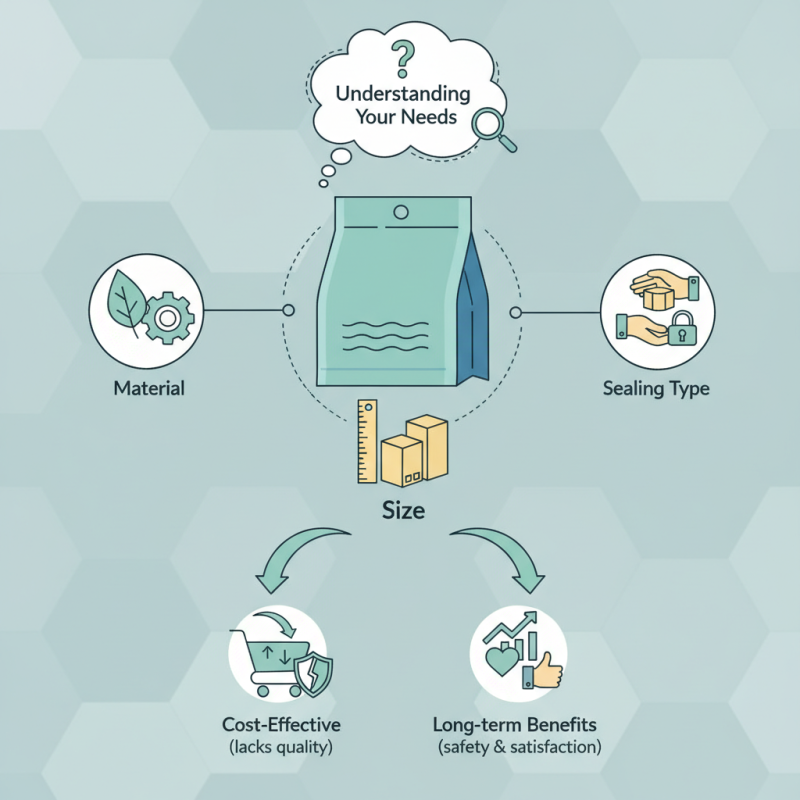
Side Seal Bags offer durability and versatility. They are widely used in various industries, from food to retail. However, selecting the ideal bag requires careful consideration. Factors such as material, size, and sealing type play a vital role. Reflect on your specific requirements before making a choice.
While many options exist, not all Side Seal Bags suit every purpose. Some may appear cost-effective but lack quality. It’s essential to weigh the long-term benefits against initial savings. A well-chosen bag enhances product safety and customer satisfaction. Take time to explore and evaluate options carefully.
When selecting a side seal bag, it's essential to understand the various types available. These bags typically come in different materials such as polyethylene or polypropylene. Each material has unique properties, impacting durability and protection features. Polyethylene bags are lightweight and flexible. Polypropylene offers greater strength and resistance to moisture, making it suitable for specific applications.
Side seal bags also vary in thickness. Thicker bags are often more durable but may reduce visibility of the contents. Transparent options allow quick identification, making them practical for retail environments. Choosing the right thickness is often a matter of balancing protection with visibility.
Consider the closure method as well. Some bags use heat seals, while others employ adhesive seals. Heat seals create a tamper-evident closure, enhancing security. However, adhesive seals provide easy access for repeated use. This choice affects user convenience and product integrity. Reflecting on your specific requirements can lead you to the most effective solution.
When choosing a side seal bag, understanding your product’s size and weight requirements is crucial. Accurate measurements can prevent issues during packaging. According to a report by the Flexible Packaging Association, over 30% of packaging failures are due to improper sizing. This leads to product damage and increased costs.
Evaluate your products carefully. For instance, heavy items may require thicker materials to avoid tears. A study by the Packaging Technology and Science journal indicated that stronger bag materials reduce leakage by 40%. Conversely, light products may need bags that prioritize cost and material efficiency.
Consider the dimensions that fit your products. Bags that are too small can lead to compression, while overly large bags waste materials and space. Reflect on past packaging experiences. Have there been issues with breakage or spoilage? Addressing these concerns will help you find a side seal bag that fits your needs better.
When choosing a side seal bag, the material greatly affects its durability and usability. Many options are available, such as
polyethylene, polypropylene, and nylon.
According to a 2022 industry report, polyethylene bags dominate the market due to their versatility and cost-effectiveness.
They are resistant to moisture and offer decent strength, making them suitable for various applications.
Polypropylene bags, although slightly more expensive, provide better clarity and strength. They can withstand higher temperatures, which is crucial for items that may need reheating.
However, their environmental impact is a concern, as noted in recent studies. About 35% of consumers express dissatisfaction with plastic waste.
This highlights the challenge of balancing usability and sustainability in packaging materials.
Nylon bags present another option, known for their puncture resistance and flexibility. Their durability can be appealing for heavy-duty uses.
Yet, their production process raises questions about environmental impact. Reflecting on these choices, it is essential to weigh the pros and cons of each material.
Each type comes with its own trade-offs, necessitating careful consideration based on the intended use and environmental implications.
When selecting a side seal bag, customization is crucial for both branding and functionality. Businesses report that 70% of consumers prefer products in visually appealing packaging. This indicates the need for attractive designs. Customization features such as color, size, and material play a significant role in attracting the target audience.
Adding unique functionalities can enhance usability. For instance, resealable options improve user experience. Approximately 60% of customers prioritize convenience when choosing products. This aligns with the capability of side seal bags to offer such features while still showcasing brand identity. Clear windows or special textures can reinforce brand recognition and product visibility.
However, not all customization efforts lead to success. Some companies overlook practical aspects like production cost and environmental impact. Research suggests that eco-friendly materials are gaining popularity, with 75% of consumers willing to pay more for sustainable packaging. Balancing aesthetics with functionality may require further exploration.
When selecting a side seal bag, cost and supplier evaluation are crucial steps. Different suppliers offer varying prices, influencing your choice greatly. It’s essential to compare the cost per unit among different suppliers. Bulk purchases might provide better pricing, but ensure quality is not sacrificed for savings. Sometimes, the cheapest option can lead to unexpected costs later.
Researching reliable suppliers is key to ensuring product quality. Look for businesses with positive reviews and a strong reputation in the market. It’s beneficial to assess their customer service as well. A dependable supplier will answer your queries promptly and resolve issues efficiently. However, some suppliers may not meet expectations. This discrepancy can lead to frustration in future transactions.
Transparency in pricing is another factor worth considering. Some suppliers hide additional costs in fine print. This can result in a higher final invoice than anticipated. Always ask for a complete breakdown of costs. Understanding the total expense helps in making an informed decision. Reflecting on these aspects can lead to better purchasing outcomes.
This chart illustrates the cost comparison of side seal bags based on different suppliers. It helps in identifying the best value for your needs.
: Common materials include polyethylene, polypropylene, and nylon, each with distinct properties and costs.
They are versatile, cost-effective, moisture-resistant, and strong enough for various applications.
They provide better clarity and strength, along with higher temperature resistance for reheating items.
Plastic waste issues affect consumer satisfaction, with 35% feeling unhappy about the environmental impact.
They are known for flexibility and puncture resistance, but their production has environmental drawbacks.
Attractive customization features like color and size enhance brand identity and attract consumers, as 70% prefer appealing packaging.
Companies may overlook production costs and environmental factors, leading to ineffective packaging solutions.
Unique features like resealable options improve user experience, and 60% of customers value convenience in their choices.
Yes, 75% of consumers show a willingness to pay extra for eco-friendly materials in packaging.
It's crucial to balance usability, aesthetics, environmental impact, and the intended use, as each material has trade-offs.
When selecting the best Side Seal Bag for your needs, it's essential to understand the various types available on the market. Each type of Side Seal Bag serves different purposes, so assessing your product's size and weight requirements is crucial. Consider the materials used in the bag's construction, as durability and usability are key factors in ensuring your products are well-protected during storage and transportation.
Furthermore, identifying customization features can enhance your branding and improve functionality. Look into options for printing and design that align with your brand aesthetic. Finally, comparing costs and suppliers will help you find the best value for your investment. By carefully evaluating these aspects, you can make an informed decision and choose the right Side Seal Bag tailored to your specific needs.

TIANCHEN PRINTING