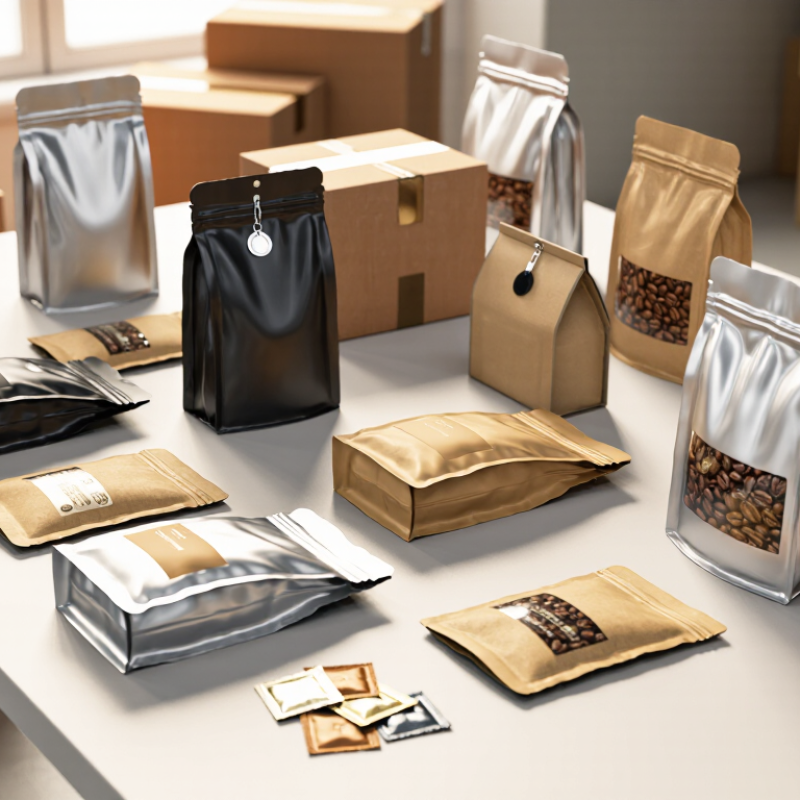
Coffee Packaging is not just a container for roasted beans. It helps protect aroma, communicate product details, and withstand handling across long supply chains. For global buyers, a package that performs well in a local shop may face different humidity, transit times, storage conditions, and customer expectations overseas. Small details matter. A weak seal can let freshness fade, while an oversized carton can add avoidable shipping volume.
The guide “7 Coffee Packaging Tips for Global Buyers” explores practical choices, from barrier materials and resealable closures to bag formats, print quality, and shipping cartons. The right option depends on the coffee, its expected shelf life, and the route it will travel. Buyers should request samples, check seals and dimensions, and confirm that product information suits the intended market. Requirements can vary, so verify them with qualified local specialists before approving a design.
There is no perfect pack. A material that protects beans effectively may be harder to recycle in some regions, and claims about sustainability deserve careful review. Cost matters, but it should be considered alongside protection, usability, and the buyer’s actual distribution needs. Some decisions remain trade-offs. These tips offer a useful starting point, not a substitute for testing a finished package under real storage and shipping conditions.
For global coffee shipments, the ICO’s 60 kg bag is a useful reference point. It is commonly used as a standard unit in coffee trade statistics, but it does not mean every shipment must use 60 kg bags. Treat it as a planning measure, then confirm the buyer’s requested net weight and packing format before production.
A 60 kg bag can be heavy to lift and awkward to stack. Smaller bags, such as 30 kg, may suit warehouses with limited equipment or buyers who need easier handling. Check the packed bag’s width and height, not only its weight: a broad sack may waste pallet space, while an overfilled one can strain its seams. Leave room for practical handling. Do not guess.
For a shipment quoted in 60 kg units, convert the quantity into actual bags and total net weight. For example, 100 units represent 6,000 kg of coffee; that could mean 100 bags at 60 kg or 200 bags at 30 kg. Confirm whether quotations and documents refer to net coffee weight, and check tare weight separately. Liner choice, stitching, pallet layout, and container loading can change the usable space. A tidy calculation may still miss a real constraint: door clearance or warehouse equipment. I would verify a sample packed bag before approving a large run.
Green coffee moisture is a key packaging check, not just a number on a shipping sheet. Many trade specifications set an upper limit of 12.5%, though a buyer’s contract may require less. Test a representative sample with a calibrated meter, and record the reading, date, and lot. If the result sits close to the limit, confirm it with a suitable laboratory method. Sampling errors happen.
Small gaps matter. Beans should be cool and dry before packing, since warm beans can create condensation inside a sealed liner. Use a clean, intact moisture-barrier liner inside the outer bag, then seal it carefully. Woven bags alone may not protect coffee from humid air during a long voyage. A pinhole can be easy to miss.
Check the container for damp floors, roof leaks, and stale odors before loading. Keep bags off the floor on clean pallets, and avoid loading wet cargo beside them. Desiccants may help manage moisture in the container, but they cannot correct beans packed too wet. One weak point in many checks is relying on a single meter reading. Take readings from several sample points, and keep the results with the shipping documents. A little extra checking can prevent a costly dispute.
For roasted coffee, oxygen transmission rate (OTR) is a practical way to compare packaging films. Ask suppliers for OTR in cc/m²/day, with test temperature and humidity stated. ASTM D3985 and ISO 15105-2 describe methods for measuring oxygen transmission through packaging materials. Results from different test conditions are not directly comparable.
As a starting specification, buyers can request OTR at or below 0.1 cc/m²/day for longer export routes, or consider values up to 1 cc/m²/day for faster stock rotation. These are procurement targets, not universal shelf-life guarantees. A 250-gram bag of ground coffee has more exposed surface area per gram than a large pack of whole beans. Small details matter. Check seals, too: a high-barrier film cannot compensate for a weak seal or pinhole. A one-way valve lets carbon dioxide escape, but does not replace an oxygen-barrier specification. Request the actual test report and confirm its conditions. Then validate the chosen pack with your own coffee, roast date, and storage temperatures. That step can feel slow. It is still worth doing.
Compare indicative oxygen transmission rates (OTR) for common packaging structures. Lower OTR means a stronger oxygen barrier.
Indicative values in cc/m²/day: LDPE, 1,500–8,000; PET/PE laminate, 50–100; metallized PET laminate, 0.5–2; aluminum-foil laminate, typically below 0.1. Actual OTR varies with material gauge, humidity, temperature, and test method. Request supplier data measured under specified, comparable conditions.
Freshly roasted coffee continues releasing carbon dioxide, often for days after roasting. In a sealed, high-barrier pouch, gas can build pressure and stress the seams. A one-way degassing valve lets CO₂ escape while helping limit outside air entering. It is a small component, but placement and seal quality matter. Not magic.
Tip: Match valve capacity to roast date, bean type, batch size, and pouch volume. Darker roasts and whole beans may release gas differently from lighter roasts or ground coffee. Ask your packaging supplier for valve-flow specifications, then test filled bags through the expected shipping and storage period. Check seams, zipper areas, and valve adhesion after handling. A valve can be present and still underperform.
Keep the valve unobstructed; labels or tight stacking can press against it. Use a suitable oxygen and moisture barrier, and seal the pouch cleanly. Record roast-to-pack timing and inspect sample bags for bulging or leaks. Test it. One detail is easy to miss: opening pressure should suit the package, not just the machine. Recheck it when the bag size changes.
| Tip | Packaging decision | What buyers should check | Why it matters |
|---|---|---|---|
| 1. Use a one-way degassing valve | Specify a valve that lets carbon dioxide escape while limiting the entry of outside air. | Confirm valve placement, compatibility with the bag material, and performance on the filled pack. | Freshly roasted coffee releases CO₂. A valve can help prevent gas buildup from distending or stressing a sealed bag. |
| 2. Choose a suitable barrier structure | Select a laminate or other packaging structure designed to limit oxygen and moisture transmission. | Request the material specification and relevant oxygen- and water-vapour-barrier data for the finished structure. | Oxygen and moisture can reduce coffee quality; protection depends on the complete pack, including seals and closures. |
| 3. Match the format to the product | Compare stand-up pouches, flat-bottom bags, cans, and other formats against the coffee, filling line, and sales channel. | Check pack dimensions, filling and sealing requirements, storage conditions, and retail display needs. | Different formats have different handling, shelf-display, transport, and production requirements. |
| 4. Specify a reliable reseal | Consider a zipper or another resealable closure when the product and pack format call for repeated opening. | Check opening ease, closure alignment, seal integrity below the zipper, and performance in user trials. | A resealable closure can make a pack more convenient, but it does not replace the primary heat seal or proper storage. |
| 5. Validate seals and valve function | Test the complete filled package, rather than relying only on individual material specifications. | Agree on suitable seal-integrity, leak, and transport checks with the packaging supplier and packing operation. | Weak seals or a poorly functioning valve can undermine packaging protection during handling and distribution. |
| 6. Plan labels for destination markets | Prepare artwork and product information for each intended market and language. | Review applicable local rules for items such as net quantity, ingredients, origin, date marking, and recycling claims. | Labelling and packaging requirements vary by destination, so confirm them before production and shipment. |
| 7. Assess shipping and end-of-life needs | Review carton protection, pack dimensions, material choices, and disposal guidance for target markets. | Check transit conditions and confirm that recyclability claims match the actual structure and local collection systems. | Long-distance distribution can expose packs to handling and environmental conditions; recycling access differs between regions. |
For coffee packaging sold in the EU, check whether each plastic layer intended to contact food meets the applicable requirements. The 10 mg/dm² limit is the EU’s overall migration limit for plastic food-contact materials under specified test conditions. It is not a universal pass mark for every package or use. Coffee type, contact time, temperature, and packaging structure all matter. Small details matter.
Tip: Request the migration test report and declaration of compliance for the exact material and intended use. Check the test conditions, food simulant, and reported result—not just a supplier’s statement that the film is “food grade.” For a pouch, confirm which layer faces the coffee and whether inks, adhesives, or recycled content require further assessment. Keep the file.
A test result below 10 mg/dm² can support compliance, but it does not replace checks for specific migration limits or other applicable requirements. Ask the packaging supplier for supporting documentation, and confirm that any changes in resin, thickness, or production site are covered. In practice, paperwork can lag behind a revised specification. That is easy to miss. Verify the version before approving a shipment, and retain samples from the production lot when feasible.
No. A 60 kg bag is a common trade reference, not a required packing size. Confirm the buyer’s requested weight and format before production.
Multiply the units by 60 kg to find the total net coffee weight. For example, 100 units equal 6,000 kg. That could be 100 bags of 60 kg or 200 bags of 30 kg. Check whether documents show net weight or include packaging.
Consider lifting equipment, warehouse space, and pallet layout. Measure a packed bag’s width and height, too. A heavy or broad sack may be awkward to handle. I would test one packed sample before ordering a large run.
For longer export routes, buyers can request an oxygen transmission rate of 0.1 cc/m²/day or lower. For faster stock rotation, values up to 1 cc/m²/day may be considered. These are procurement targets, not shelf-life guarantees.
Temperature and humidity affect test results. Ask for the measurement and its conditions, then compare results taken under matching conditions. Otherwise, the numbers can mislead.
No. The valve releases carbon dioxide, but it does not replace a suitable barrier film. Check seals and pinholes, too. Small flaws matter.
It is an overall migration limit for plastic food-contact materials under specified conditions. It is not a universal pass mark for every package or use. Specific migration limits or other requirements may also apply.
Request the migration test report and declaration of compliance for the exact material and intended use. Check the food simulant, test conditions, and result. Confirm that the documented version covers any changes to material, thickness, or production site. Paperwork can lag. Verify it.
Effective Coffee Packaging helps global buyers protect product quality while making shipments easier to handle and verify. Choose export bag sizes with the ICO’s 60 kg coffee trade unit in mind, and keep green coffee moisture at or below the 12.5% trade limit to support consistent storage and transport. For roasted coffee, specify oxygen barriers using OTR values so packaging performance can be compared clearly against product needs.
Freshly roasted coffee releases carbon dioxide, so one-way valves can allow gas to escape while limiting outside air entering the bag. Buyers should also request documentation confirming that plastic food-contact materials meet the applicable EU migration limit of 10 mg/dm². Clear specifications for bag size, moisture, oxygen transmission, valve function, and material compliance can help buyers assess packaging consistently and reduce avoidable issues across international shipments.

TIANCHEN PRINTING