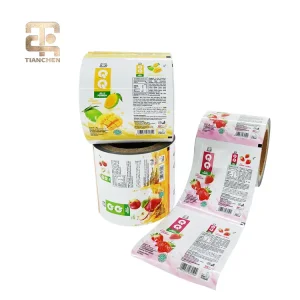
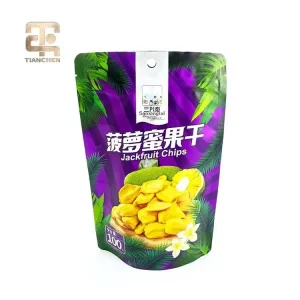
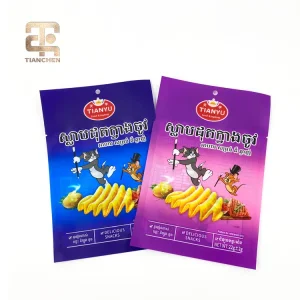
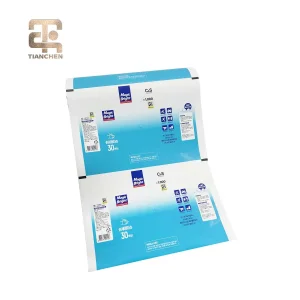
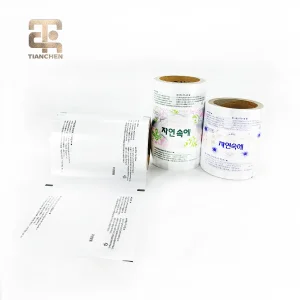
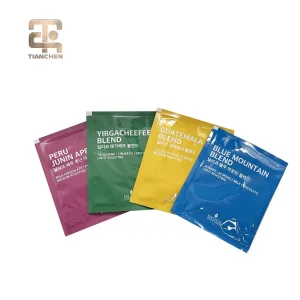
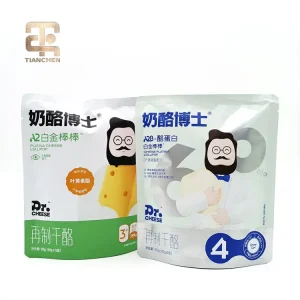
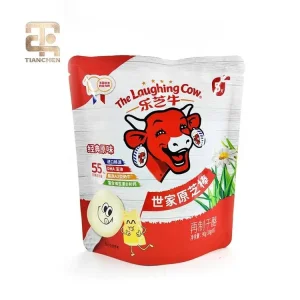
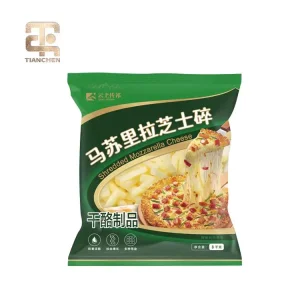
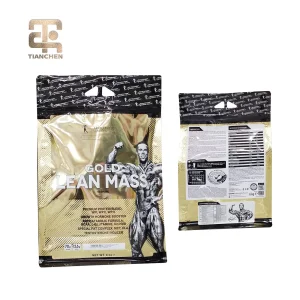
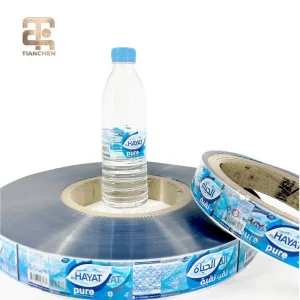
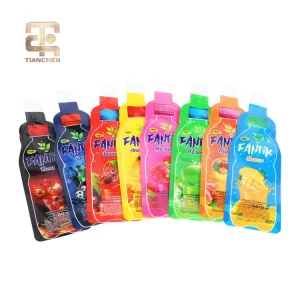
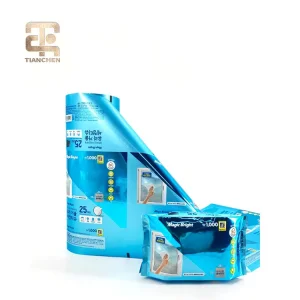
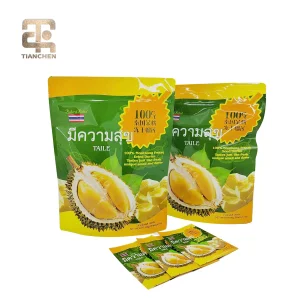
Discover our highly requested, eco-friendly flexible packaging rolls and bags directly supplied by our premier manufacturing facilities.
The global packaging sector is undergoing a monumental paradigm shift. Driven by rigorous international environmental mandates—such as the European Union’s Packaging and Packaging Waste Regulation (PPWR), North American state-level plastic reduction statutes, and China's stringent bans on non-degradable single-use plastics—global brands are rapidly restructuring their supply chains. The search for a qualified China Biodegradable Film Factory has transcended simple cost-optimization; it is now a critical core corporate strategy for compliance and environmental stewardship.
Traditional multi-layered composite materials present severe recycling challenges. As global municipalities turn towards composting infrastructures, compostable and biodegradable films emerged as the ideal technological substitute. However, the commercial transition faces multi-dimensional challenges. Packaging engineers must tackle the degradation kinetics of bio-plastics, ensuring structural integrity during logistical cycles while achieving accelerated breakdown inside commercial composting systems or marine conditions.
Guangdong Tianchen Printing Co., Ltd addresses these core challenges by merging two decades of technical gravure printing expertise with advanced biopolymer science. By optimizing the molecular structure of flexible laminates, we offer high-barrier structures that prevent premature product spoilage without compromising ultimate biodegradability.
Understanding the complex polymer matrix behind high-performance biodegradable films. E-E-A-T insight from our technical engineering labs.
Derived from 100% renewable plant resources like corn starch or sugarcane. Possesses outstanding optical clarity and high tensile strength. Excellent for heat-shrink labels, transparent window films, and dry food packaging that demands premium product visibility.
A synthetic random copolymer that delivers remarkable flexibility and toughness. Its physical properties closely mimic low-density polyethylene (LDPE), making it the primary additive to blend with PLA to create highly tear-resistant biodegradable shopping and dry fruit bags.
Synthesized naturally through microbial bio-fermentation. Highly customizable and uniquely marine-degradable. PHA offers extraordinary moisture resistance and stable thermal parameters, acting as the premier choice for future high-end food wraps and flexible medical packaging.
Derived from sustainably managed wood pulp. They possess native high oxygen and aroma barrier profiles. Often combined in multi-layer structures as the barrier layer, eliminating the need for metallic foils and ensuring clean decomposition after use.
GUANGDONG TIANCHEN PRINTING CO., LTD is a professional, technology-driven printing and packaging enterprise boasting more than 20 years of profound experience in the flexible packaging industry. Rooted in Guangdong, the paramount hub of manufacturing and international trade in China, Tianchen Printing has grown into an internationally reliable partner for global Fortune-500 brands and localized businesses alike.
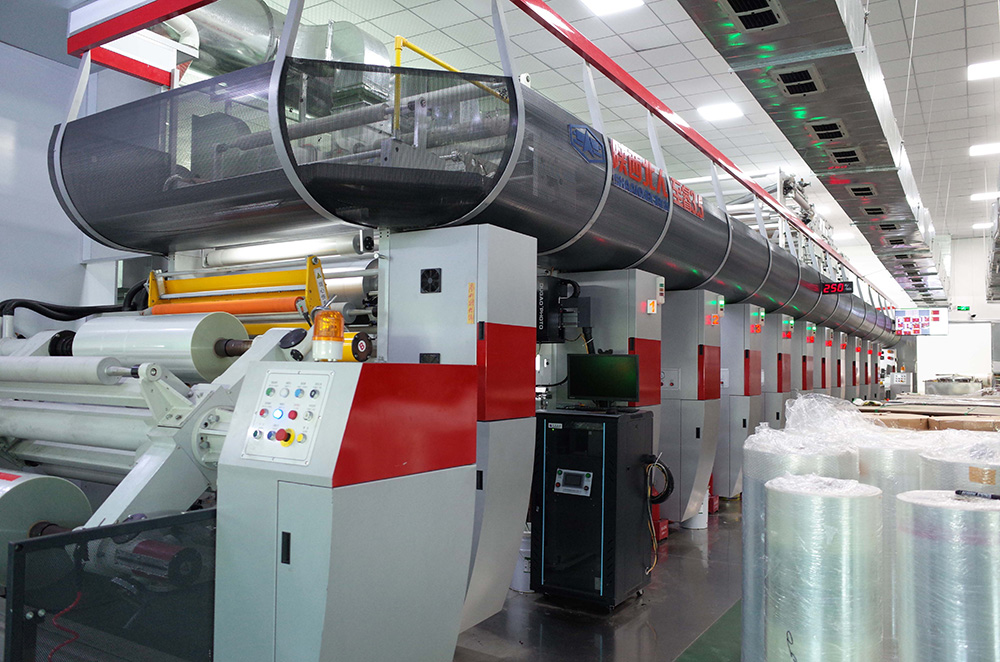
Our core capabilities focus heavily on advanced rotogravure printing, eco-friendly solvent-less laminating, and ultra-precise converting services for custom flexible packaging solutions. By managing the entire production process from extrusion to film coating, we ensure that every square meter of film produced conforms to rigorous global quality metrics.
Our global business footprint covers a highly diverse range of industries worldwide, including food and beverage, pharmaceuticals, daily cosmetics, household chemicals, consumer electronics, and modern agriculture. We customize complex packaging solutions to meet the unique functional requirements of each sector—from high-barrier moisture-proof films for organic coffee to soft, breathable backsheet films for baby diapers.
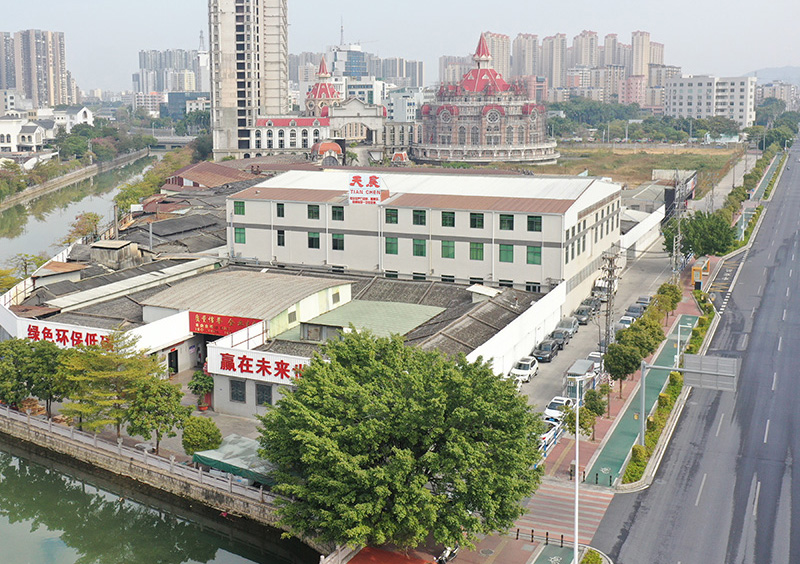
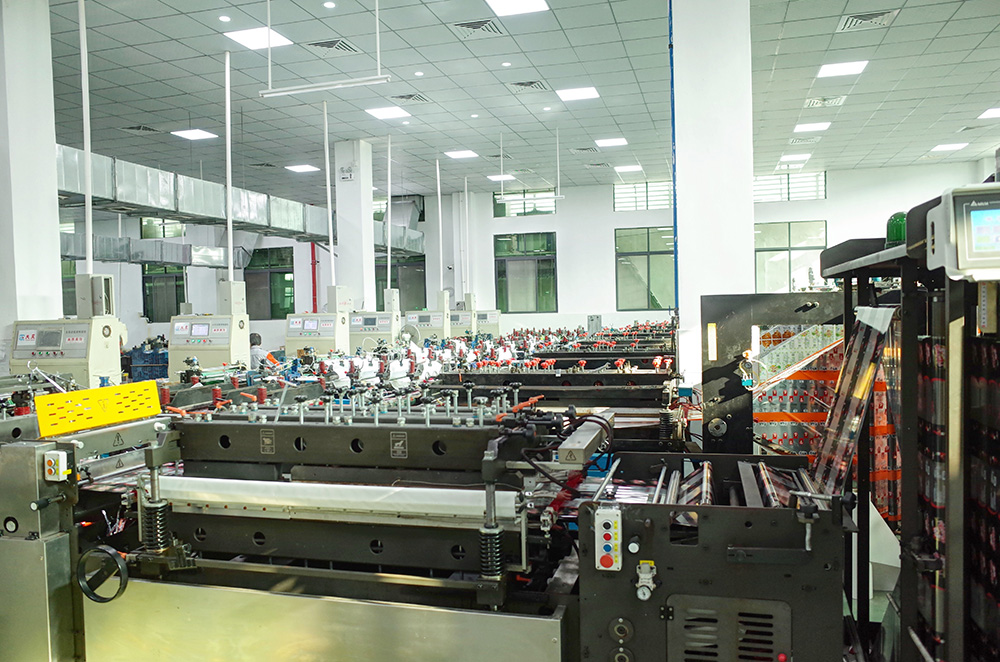
Guided by our four core pillars, we maintain steady technological growth in the highly competitive global packaging landscape.
1. Innovation: We consistently allocate a major portion of our revenue to R&D, relentlessly upgrading printing technologies, introducing compostable water-based inks, and custom-engineering multi-layer recyclable barrier materials to solve sealability and mechanical issues of biodegradable substrates.
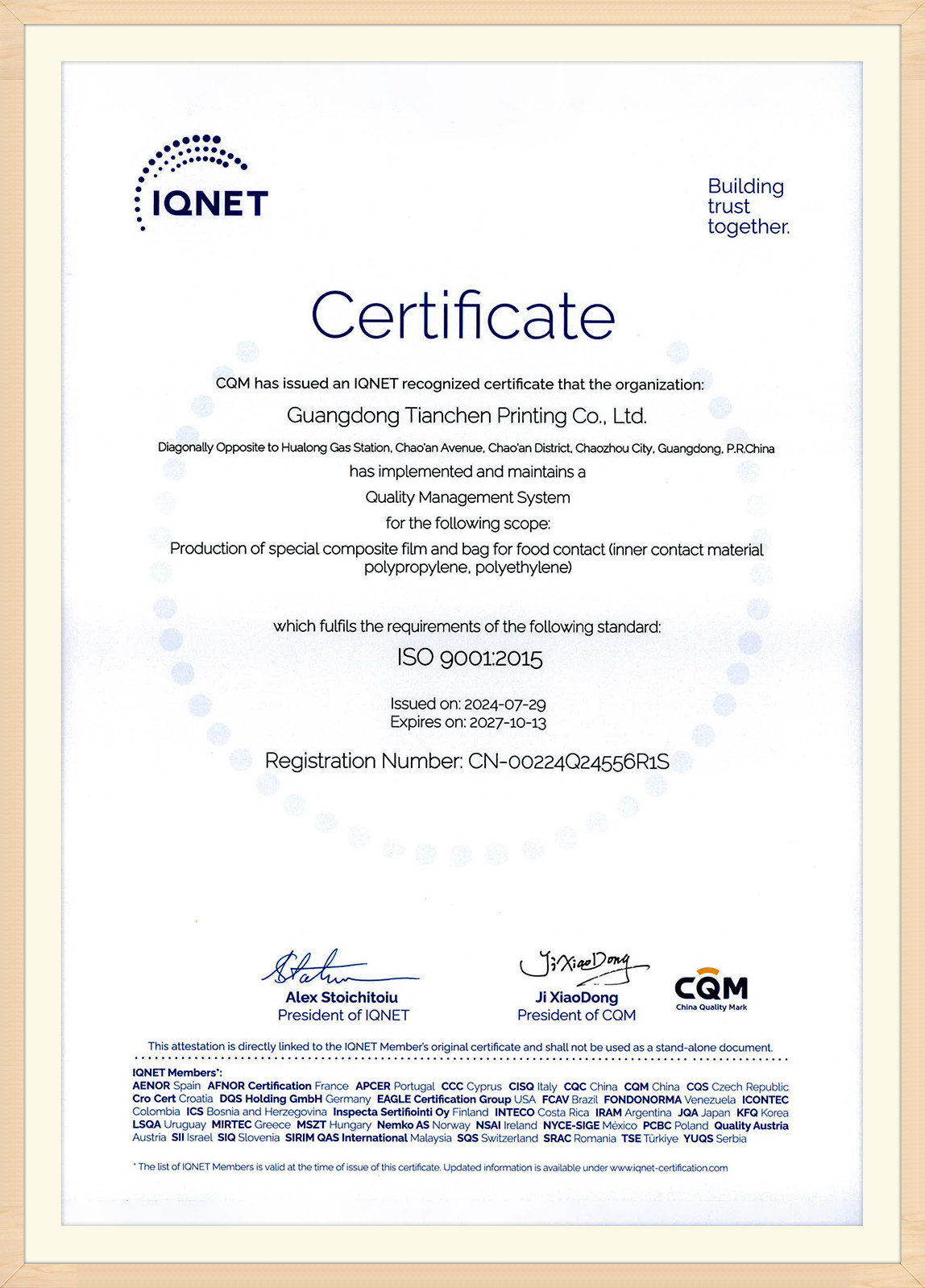
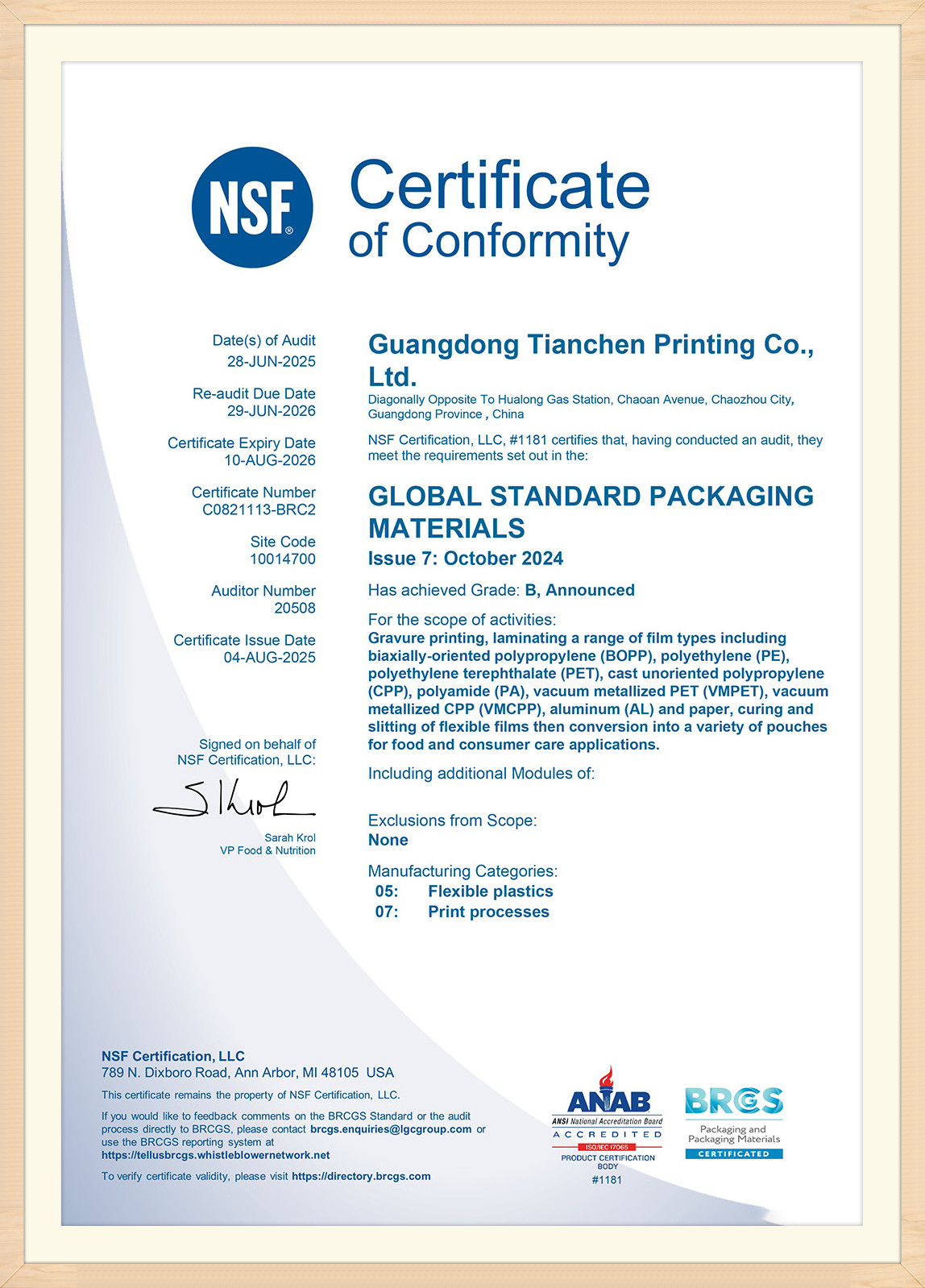
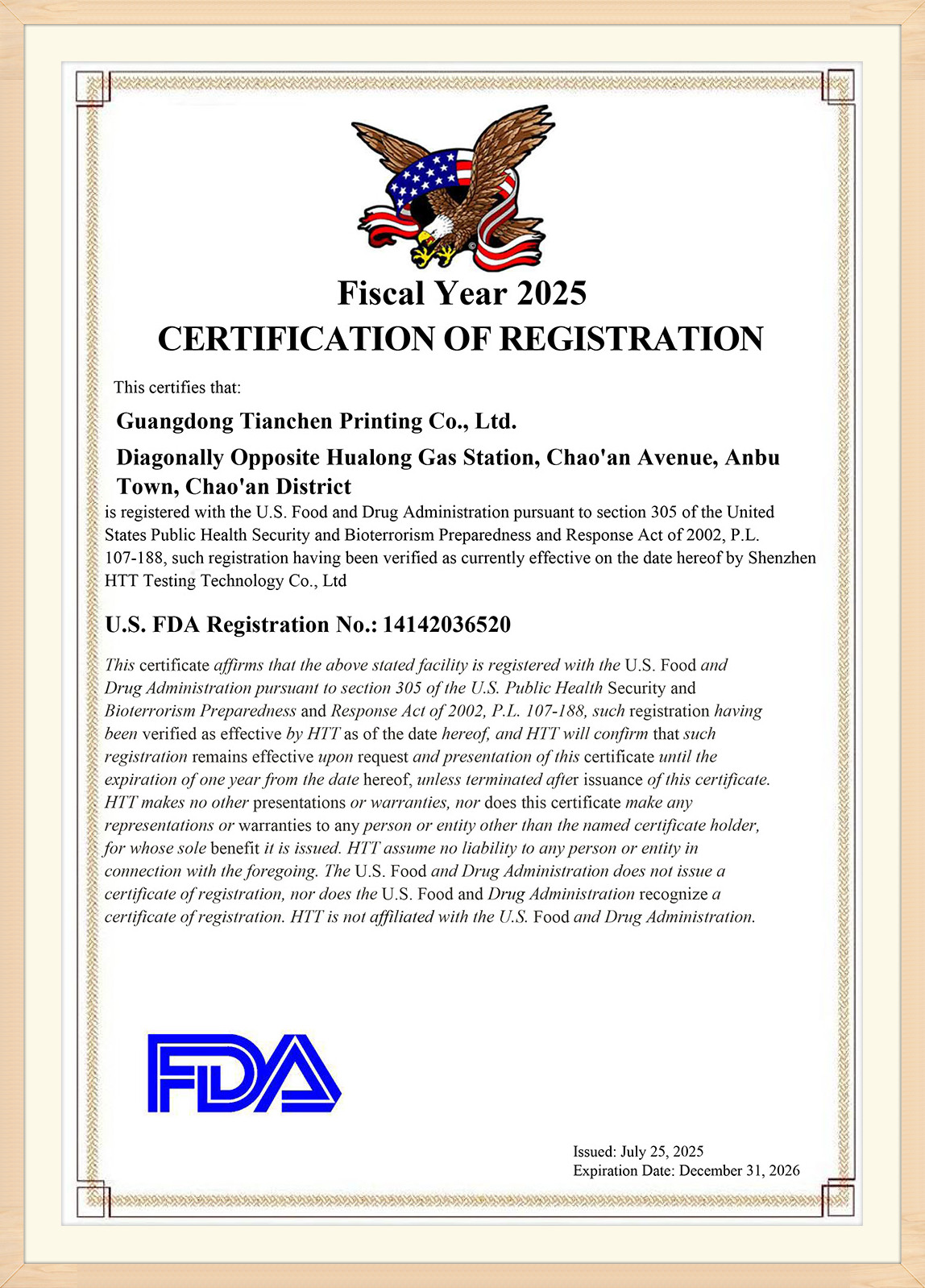
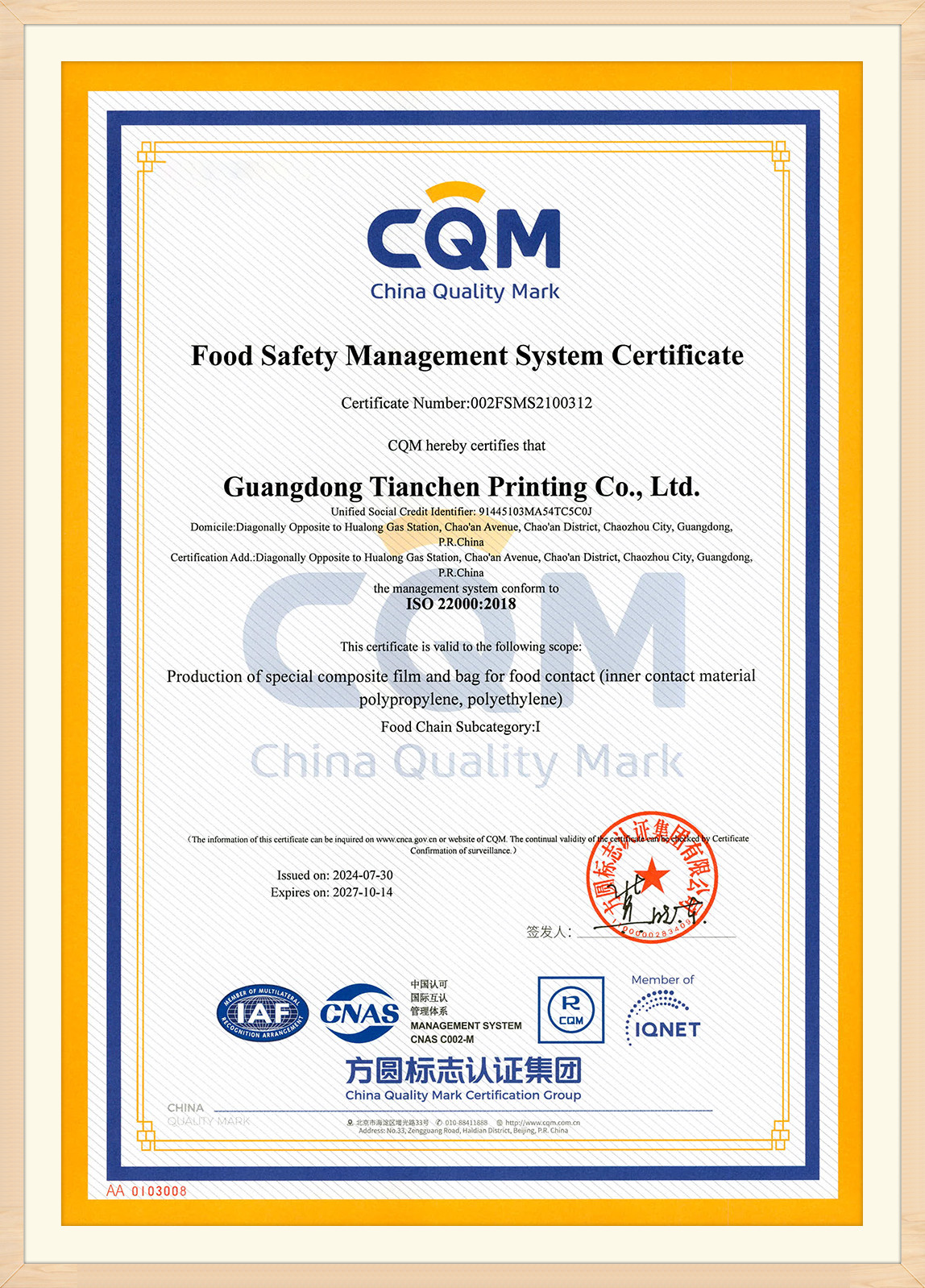
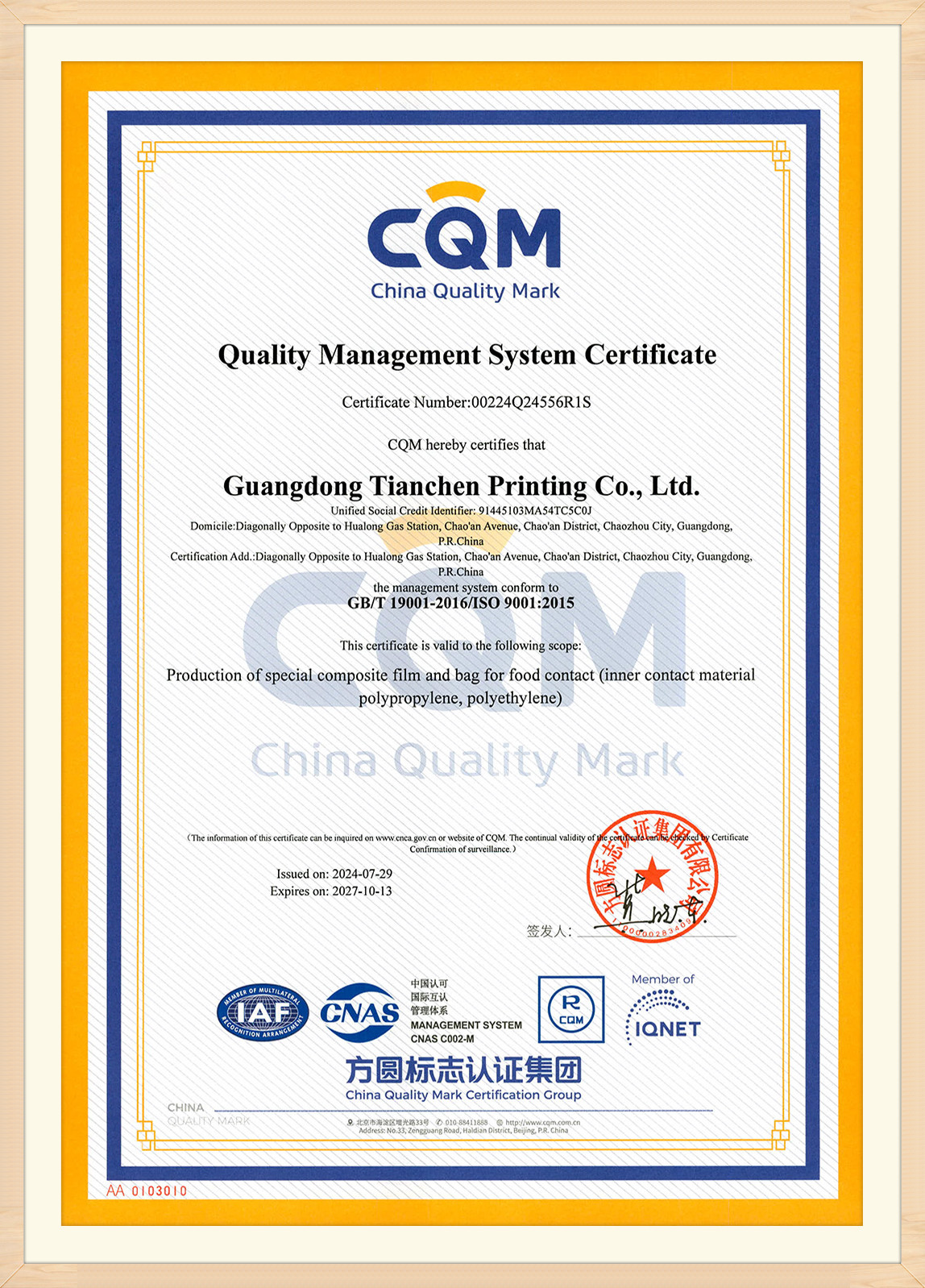
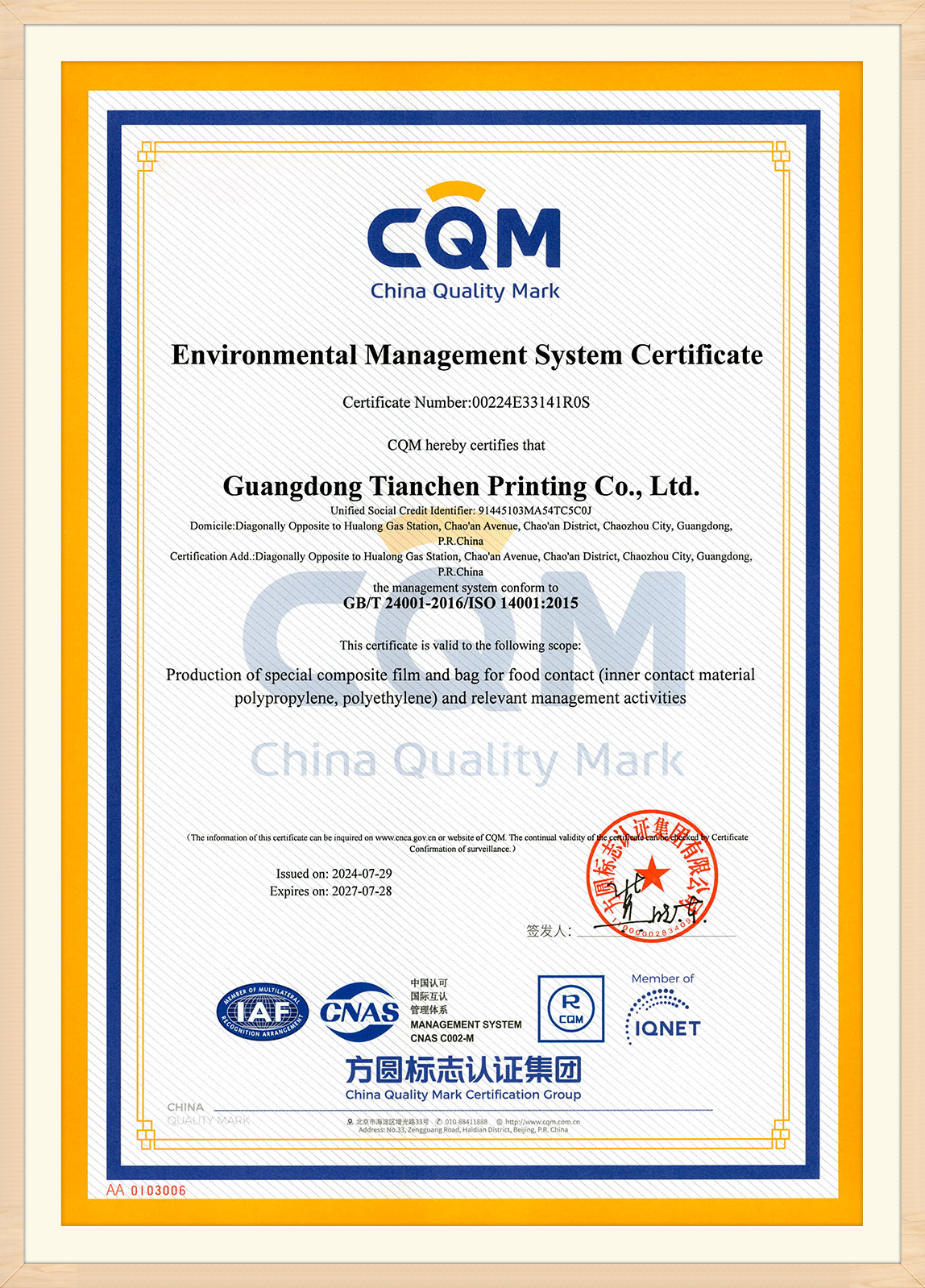
2. Internationalization: We adhere to premium international standards in production, environmental stewardship, and management. By aligning our operational practices with FDA, EU Food Contact, and ISO certifications, we seamlessly integrate into the Western mainstream supply chains.
3. Integration: We offer a seamless, one-stop flexible packaging service integrating prepress graphic design, precision plate making, rotogravure printing, solvent-less lamination, high-precision slitting, and final bag making. This optimized pipeline minimizes production waste and reduces overall costs.
4. Intelligentization: By deploying state-of-the-art closed-loop color inspection systems, computerized tension control lines, and digital manufacturing execution systems (MES), we execute micro-precision control at every stage, assuring unparalleled batch-to-batch color and mechanical consistency.
Under the strategy of "innovation and transformation, integrated operation and steady growth", we firmly uphold the concept of circular economy development. Modern environmental packaging demands the mitigation of Volatile Organic Compounds (VOCs) during production. Tianchen Printing has deployed state-of-the-art non-solvent (solvent-free) laminating machinery. This prevents chemical solvents from transferring into food-contact surfaces, creating a safe and odor-free packaging environment.
Our commitment to sustainability extends to our materials. By leveraging industrial PLA/PBAT substrates alongside water-based bio-inks, our finished compostable packaging naturally degrades into carbon dioxide, water, and nutrient-rich biomass within 180 days under commercial composting environments. This minimizes municipal landfill load and aids corporate carbon reduction metrics.
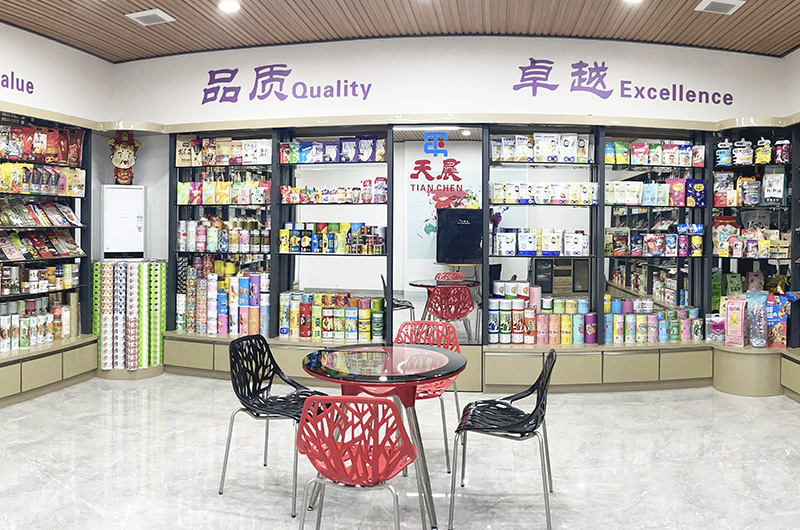
Choose Guangdong Tianchen Printing for flexible packaging that delivers beyond expectations, backed by rigorous third-party testing and global standards.
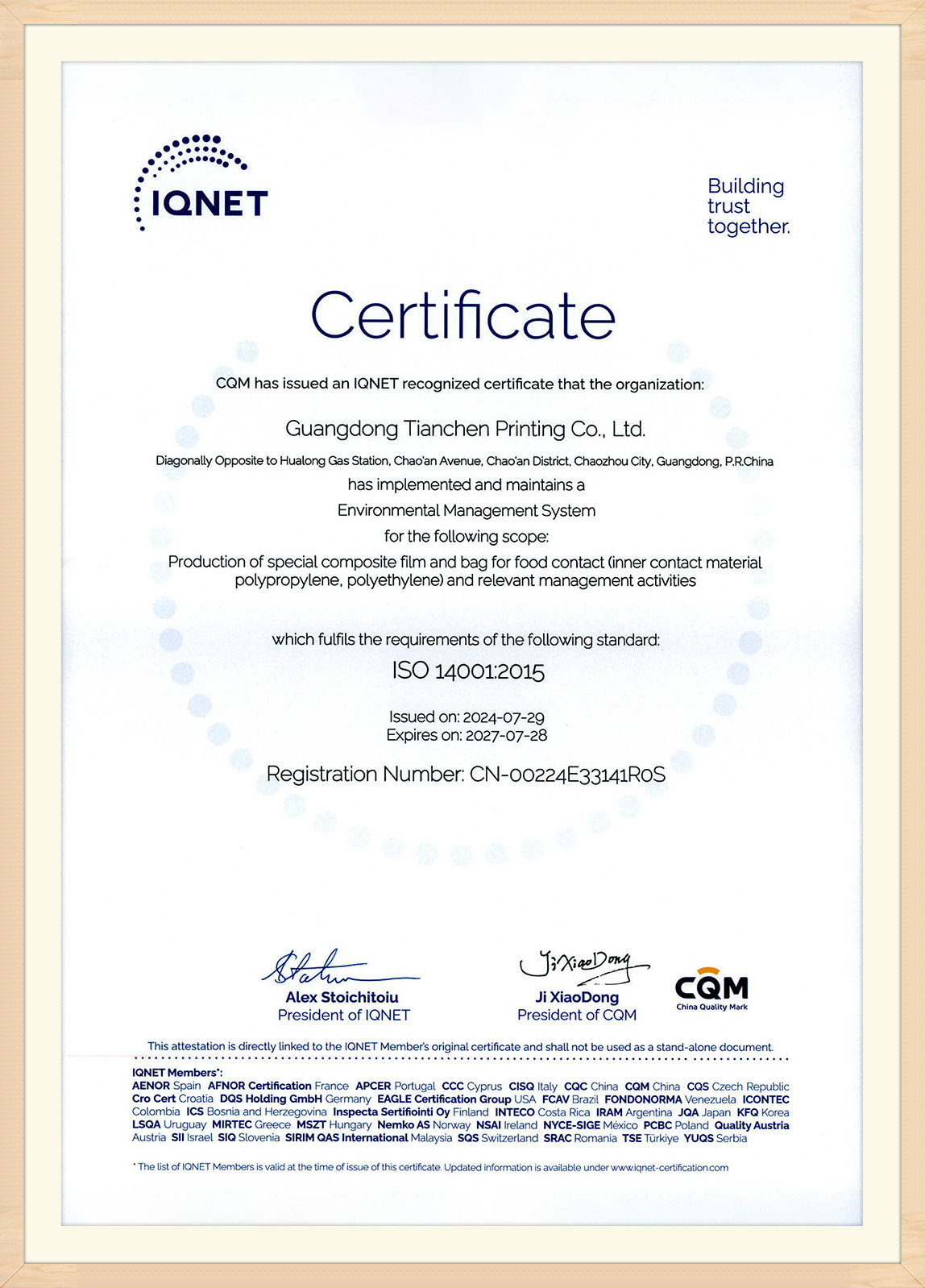
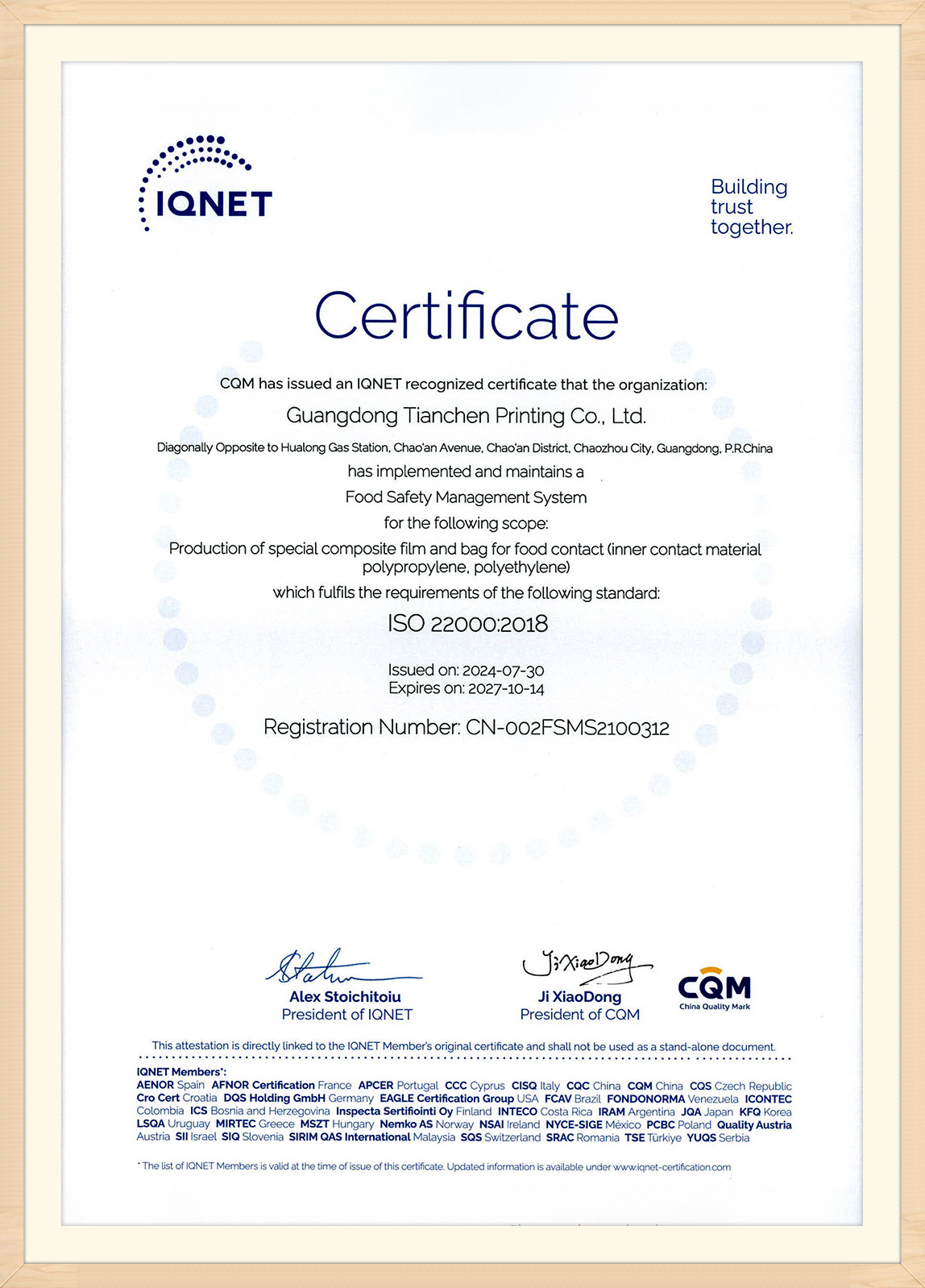
Providing engineered barrier materials and custom bags for cross-industry specifications.
Designed for potato chips, dry fruits, and sour mango strips. Features precise three-side seals or stand-up configurations with high moisture and oxygen barrier coatings to avoid oxidation, rancidity, and product spoilage.
Engineered for personal care items, baby wipes, and facial tissue packaging. Delivers optimal mechanical stretch, high tear strength, and automated roll-fed machine compatibility for high-speed converters.
Incorporates specialized aroma-retention films, out-gassing valve integration options, and puncture-resistant polymers. Ideal for keeping premium roasted coffee beans and artisanal cheeses fresh and well-protected.
Get authoritative answers on materials science, barrier performance, global standards, and customization protocols.
The standard shelf life of certified PLA/PBAT blended biodegradable films is 10 to 18 months, depending on storage conditions. To maintain maximum mechanical strength and sealing performance, films should be kept in a climate-controlled warehouse (temperature under 30°C, relative humidity below 60%) away from direct ultraviolet light exposure. Premature degradation does not occur in dry warehouse storage; it requires the presence of moisture, warmth, and micro-organisms found in soil or industrial compost to trigger the microbial breakdown process.
Pure biopolymers like PLA or PBAT naturally possess higher Water Vapor Transmission Rates (WVTR) than conventional fossil fuels (like PP or PE). To overcome this and guarantee optimal product shelf life, a professional factory like Guangdong Tianchen Printing incorporates ultra-thin, compostable high-barrier layers. We utilize metallized PLA (MPLA), cellulose-derived layers, or natural silicon oxide (SiOx) / aluminum oxide (AlOx) coatings. These physical vapor deposition treatments dramatically decrease OTR and WVTR without affecting the overall compostability of the flexible packaging.
To ensure global regulatory compliance, look for manufacturers certified under key regional standards: EN 13432 (European Standard for compostable packaging), ASTM D6400 (US Standard), and AS 4736 (Australian Standard). These certifications, verified by third-party bodies such as BPI, DIN CERTCO, or TUV Austria (OK Compost Industrial/Home), guarantee that the materials break down harmlessly in commercial compost sites, leaving no toxic heavy metals or synthetic microplastics behind.
Yes. However, the process demands precise thermal and tension control. Biodegradable films have a lower melting point and less heat stability than PET or BOPP. Tianchen Printing uses specialized low-temperature drying tunnels and computerized electronic shaft tension controls on our rotogravure lines. This prevents heat-stretching and maintains micron-level registration accuracy. Additionally, we utilize eco-friendly, compostable water-based inks or soy inks that match the film’s decomposition characteristics.
This is a critical semantic distinction for global importers:
Review additional customized solutions in our flexible film product lines, manufactured to high-precision industry standards.
 TIANCHEN PRINTING