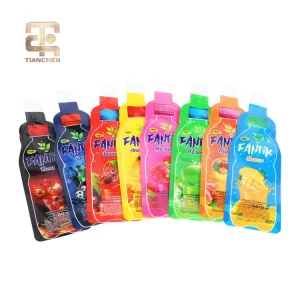
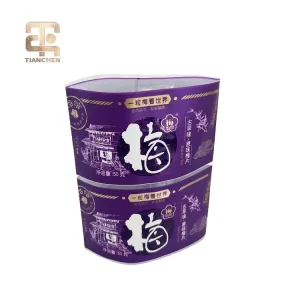
Explore our premium custom engineered films, stand-up zipper pouches, and customized structural solutions built for high-performance industrial applications.
Executive Summary: The global transition towards intelligent flexible packaging is driven by two critical forces—sustainable materials stewardship and smart supply chain efficiency. Modern brands no longer just require simple containment; they demand hyper-functional, hermetically resealable, gas-barrier-optimized, and aesthetically pristine solutions that perform continuously across multi-tier regional distribution channels. This industry whitepaper details the paradigm shifts in ODM Resealable Plastic Bags Manufacturing, analyzing materials engineering, China 4.0 production capabilities, and cross-industry procurement matrices.
The global market for flexible packaging, specifically high-barrier resealable bags and stand-up pouches, is currently undergoing an unprecedented technological renaissance. Historically categorized as simple consumer commodities, these highly engineered units have emerged as strategic product differentiators. According to market analyst reports, the compound annual growth rate (CAGR) of resealable barrier pouches remains robust, powered by a steady structural transition from heavy rigid formats (glass jars, metal canisters) to high-barrier flexible alternatives. This lightweight transition saves up to 70% in raw material consumption, drastically reduces logistical greenhouse emissions, and optimizes retail shelf occupancy.
From a commercial perspective, resealability is no longer an optional luxury. In highly saturated markets, consumers seek ease-of-use, extended product lifespan post-opening, and preservation integrity. Modern zipper architectures, including press-to-close channels, sensory click-locking paths, and slider closures, prevent degradation from moisture, environmental oxygen, and cross-contamination. Consequently, industries spanning specialty coffee, dairy solids, clinical veterinary foods, organic dry snacks, and personal care products are aggressively expanding their usage of multi-layered ODM resealable solutions.
Staying at the forefront of packaging engineering requires tracking several converging macro-trends:
Optimized Oxygen Transmission Rate (OTR) and Water Vapor Transmission Rate (WVTR) through EVOH co-extrusion and high-vacuum metallization (AL/VMPET), ensuring maximum shelf-life extensions.
Engineered multi-layer films withstand extreme drop tests, puncture stressors, and vacuum sealing pressure without micro-fissuring or joint delamination.
Incorporates precise tactile click, slide-lock, or hook-and-loop configurations engineered to function flawlessly even when exposed to fine-grain powder residue.
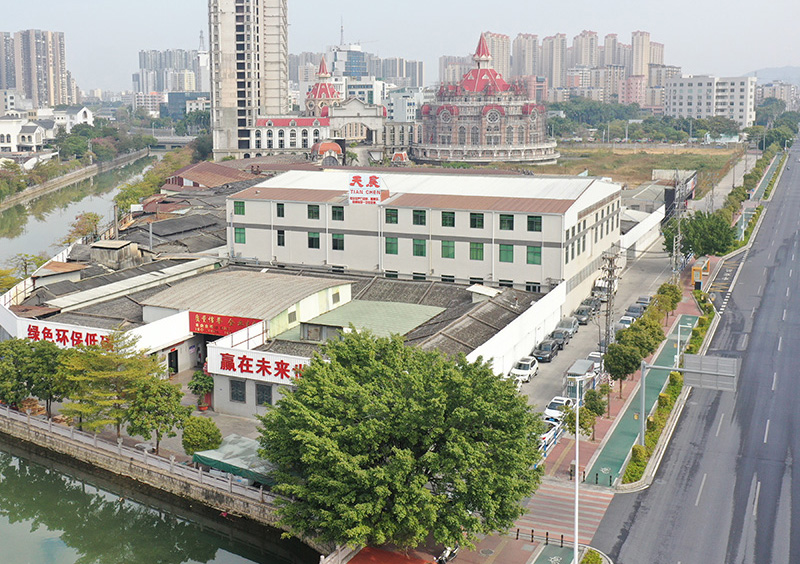
We are a professional printing team boasting more than 20 years of profound experience in the flexible packaging industry. Rooted in Guangdong, a hub of manufacturing and international trade in China, Tianchen Printing has grown into a reliable partner for global clients by focusing on rotogravure printing, laminating, and converting services for flexible packaging solutions.
Our business covers a diverse range of industries worldwide, including food and beverage, pharmaceuticals, daily chemicals, electronics, and agriculture. We tailor packaging solutions to meet the unique needs of each sector, from moisture-proof packaging for snacks to high-barrier films for pharmaceuticals, ensuring product safety, shelf appeal, and transportation stability. Over the years, we have established long-term cooperative relationships with clients from Europe, North America, Southeast Asia, and other regions, winning wide recognition for our consistent quality and professional service.
Innovation, Internationalization, Integration, Intelligentization
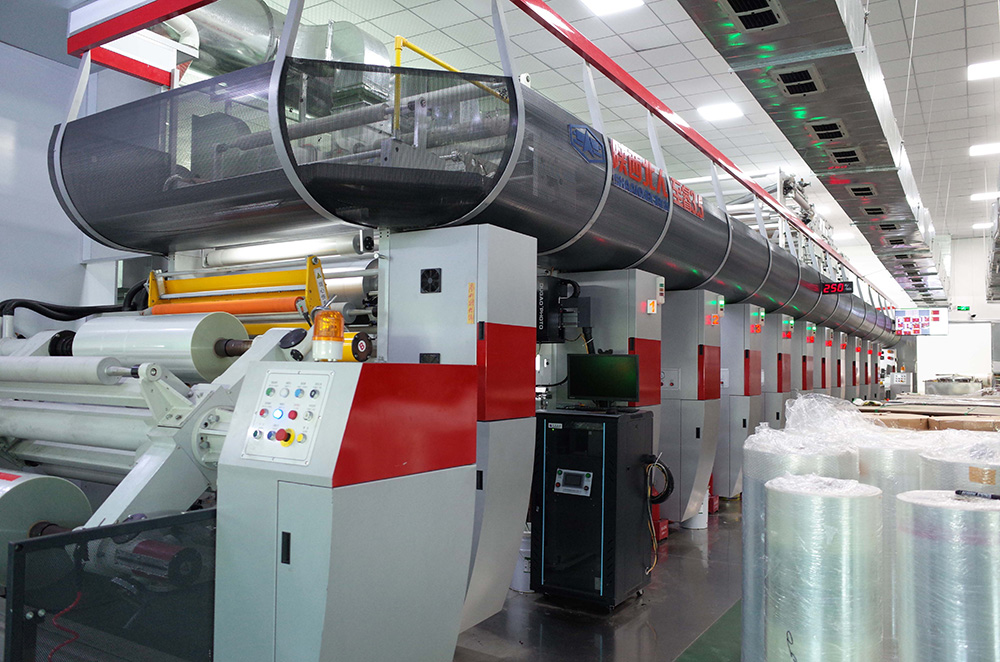
Guided by our core four "IN" concepts, we persist in investing in R&D, upgrading printing technologies and processes, and developing eco-friendly, high-performance packaging materials to keep pace with industry trends and client demands.
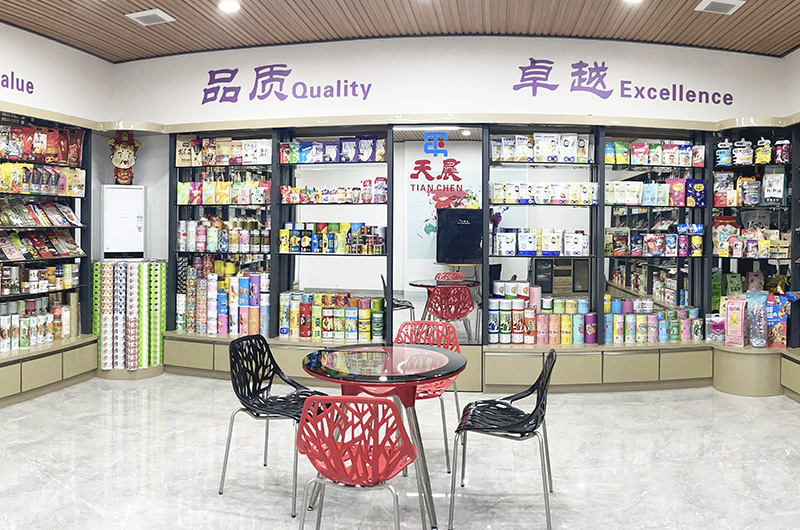
We adhere to global standards in production and management, obtain international certifications, and expand our global service network to integrate seamlessly into the international mainstream market.
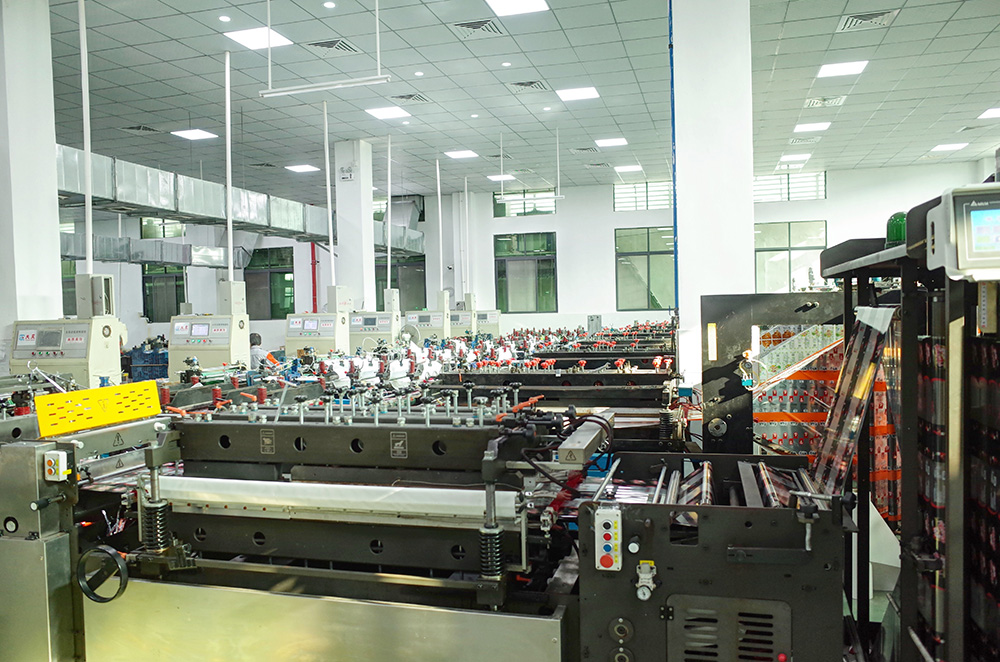
We have introduced advanced intelligent production equipment and digital management systems, realizing automated operations in key links such as color matching and quality control, ensuring supreme quality and product consistency.
Navigating the volatile landscape of global trade demands sourcing partners with high systemic agility and solid supply chains. The Guangdong flexible packaging cluster in China represents the peak of manufacturing ecosystem optimization. Through advanced automation, centralized sourcing of petrochemical base stocks, and integrated digital execution networks, Chinese smart manufacturing facilities provide unparalleled efficiency advantages.
Specifically at Guangdong Tianchen Printing, Factory 4.0 initiatives manifest as highly unified, digital processing steps. Automated high-speed rotogravure presses operating at up to 350 meters per minute are calibrated using dynamic electronic color-register scanners. This tech maintains precision deviation to within 0.1mm, ensuring flawless registration of complex micro-text and realistic imagery. Solventless lamination lines run continuously to cross-link performance-grade outer films (OPP, PET, Matte-PET) to robust inner sealing barriers (CPP, PE, EVOH) with zero organic VOC emissions. Furthermore, the localized integration of the supply chain—from high-strength polymer extrusion to multi-lane automated pouch making and inline quality inspection—dramatically compresses product realization cycles from months to days.
Our localized placement within Guangdong guarantees unmatched logistics integration. Leveraging direct proximity to global mega-ports like Shenzhen, Guangzhou, and Hong Kong, international shipments are deployed with extreme velocity. Intermodal transport pipelines, coupled with rapid custom clearance automation, safeguard clients from regional supply shocks, ensuring reliable inventory flow and minimal lead times.
For B2B procurement managers, purchasing functional packaging solutions is not merely about identifying low unit prices. It is a systematic process of risk mitigation, operational compatibility matching, and quality assurance. Global sourcing operations systematically evaluate factories on several key performance metrics:
| Procurement Parameter | Primary Risk Criteria | Guangdong Tianchen Resolution Strategy |
|---|---|---|
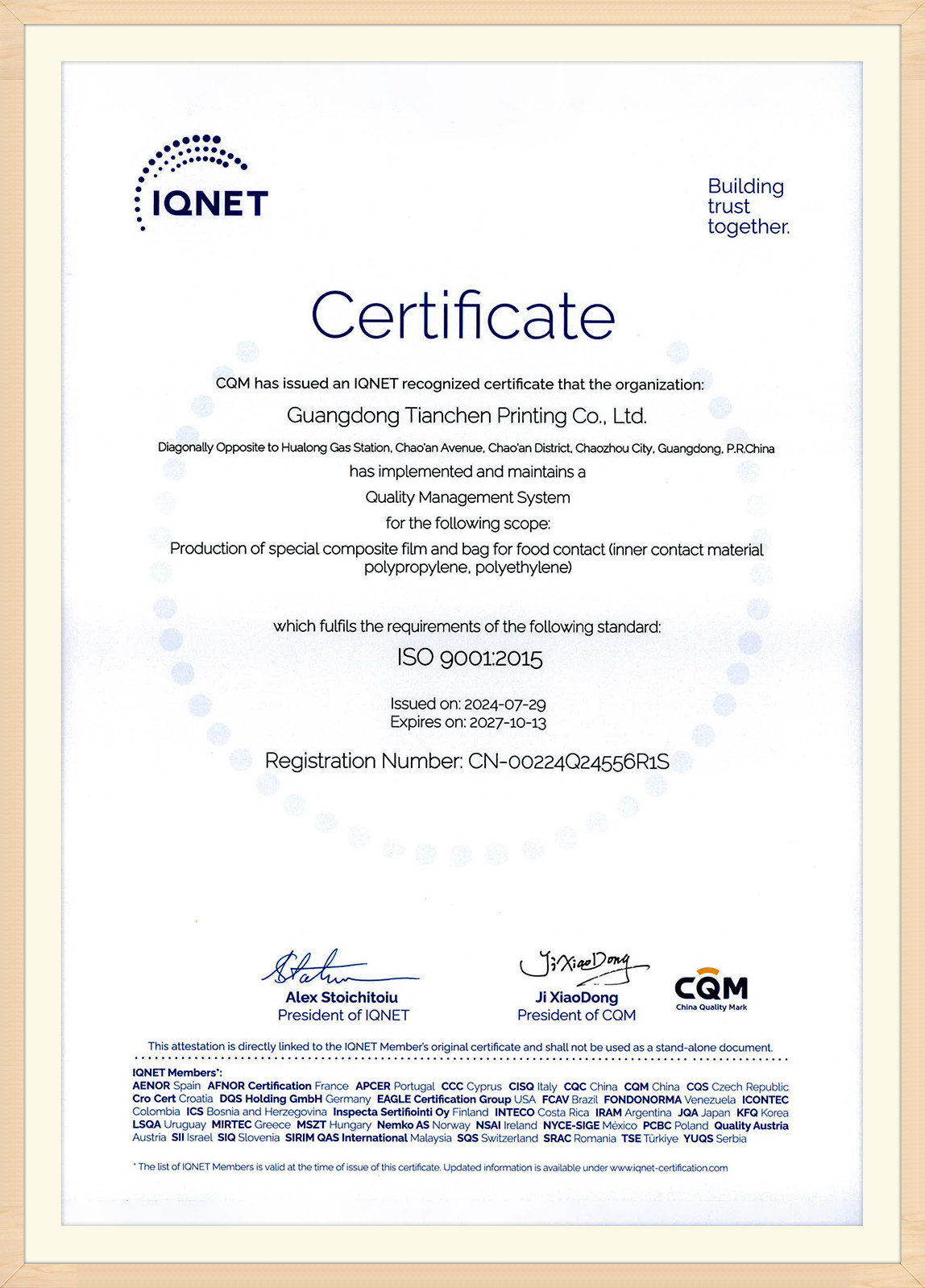
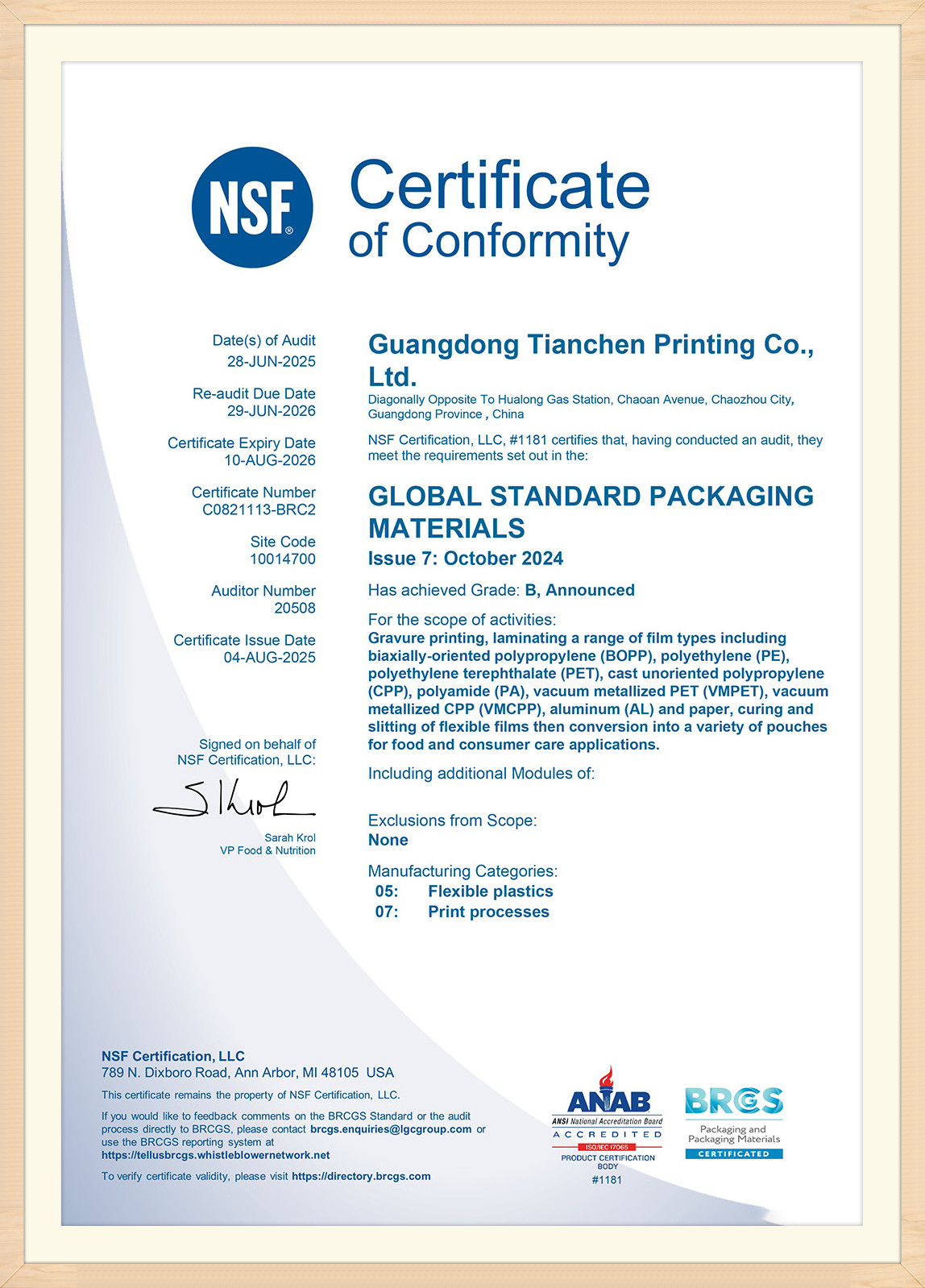
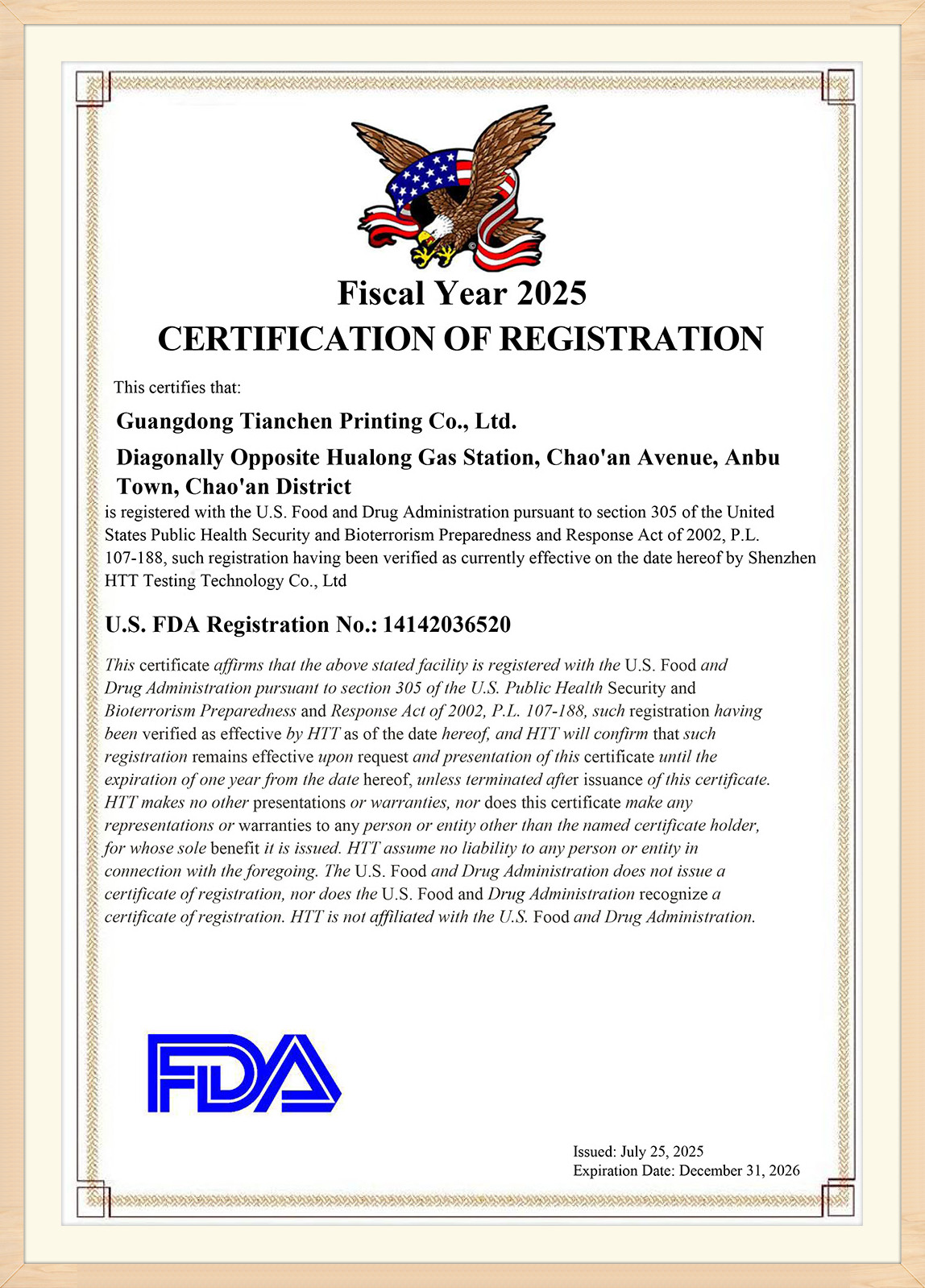
| Regulatory & Direct Food Contact | Contamination of products; migration of heavy solvents and phthalates. | 100% FDA, EU Food Contact, ISO 9001:2015, and BRCGS compliant. Use of virgin polymers and food-grade polyurethane adhesives. |
| Printing Fidelity | Poor shelf presence, faded colors, and unaligned print layers on curved sections. | High-speed 10-color electronic rotogravure with automated register alignment and spectroscopic color-match validation. |
| Seal Integrity & Failure Rates | Bursting seals during shipping, micro-channel leakage, and quick oxidation. | Rigorous multi-point testing: peel-strength assessments, high-pressure burst parameters, and gas bubble immersion testing. |
| MOQ vs. SKU Proliferation | Excessive inventory costs for seasonal items or niche market products. | Hybrid manufacturing strategies combining high-volume rotogravure with flexible, fast-turnaround plate production. |
Our custom resealable and heat-sealable polymer systems are purposefully structured to support distinct high-impact commercial scenarios:
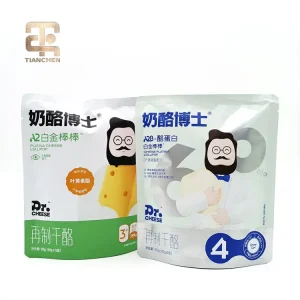
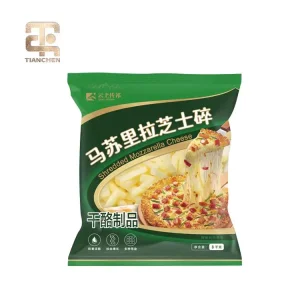
1. Premium Food & Beverage: In cheese products, cured meats, and semi-moist confections, preservation is key. Our custom-printed laminated zipper stand-up pouches incorporate deep oxygen-scavenging inner layers (co-extruded EVOH) and high-strength zippers. This halts microbial proliferation, locks in ambient aroma, and prevents fats from leaching through the outer layer.
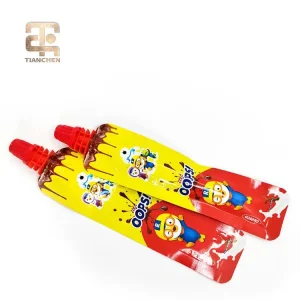
2. High-Moisture Daily Chemicals & Beverage Spouts: Spout pouches present excellent alternatives to rigid plastic bottles for fabric softeners, structural personal care gels, and direct-consumption beverages. Using multiple high-barrier layers of nylon (PA) and polypropylene (CPP), our packages deliver robust drop-resistant flexibility and dynamic liquid dispensing capability.
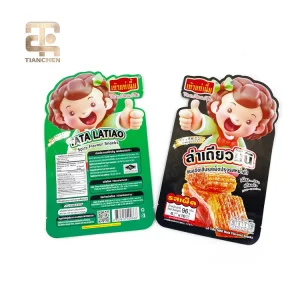
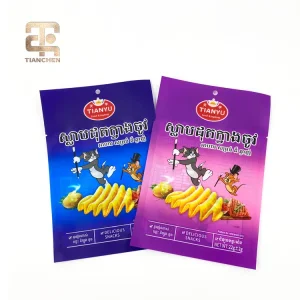
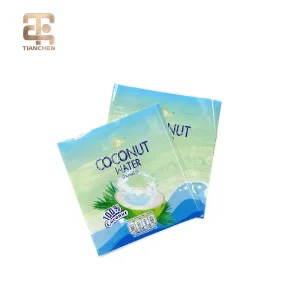
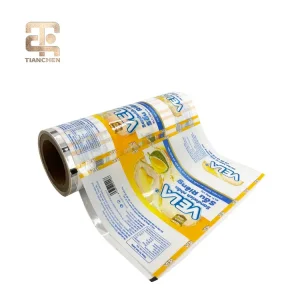
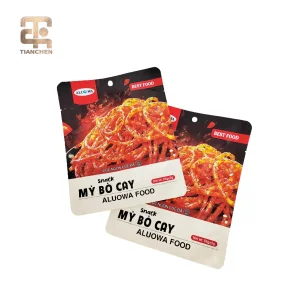
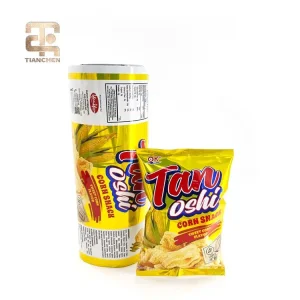
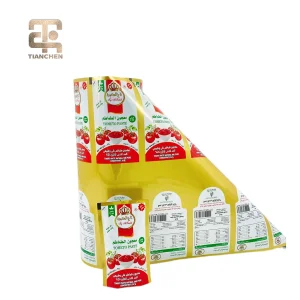
3. Crisps & High-Fat Snack Foods: Three-side-seal packaging and roll films engineered with metallized structures (VMPET/PE) block UV rays and atmospheric moisture. This preserves product crunch and prevents rancidity in highly sensitive fried foods.
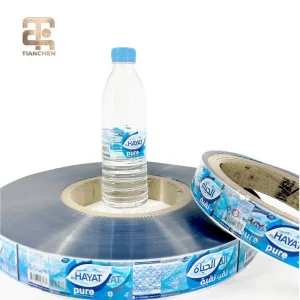
4. High-Shrink Labeling & Bottle Sleeving: Customized PVC, PETG, and OPS shrink wraps provide all-around visual branding options for custom-molded glass and plastic containers. These maintain tight seal contours even around irregular shapes under thermal heat tunnels.
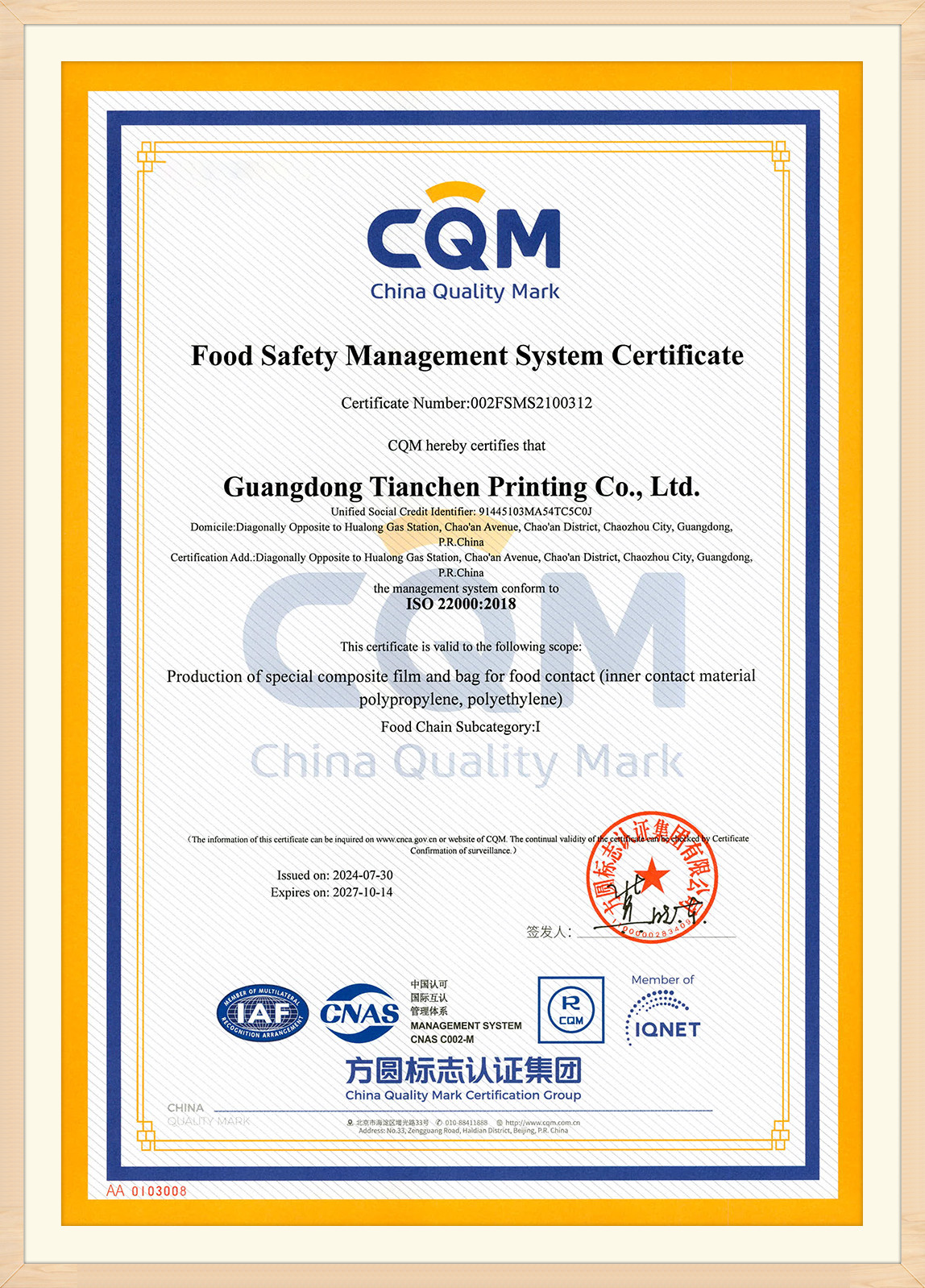
Top-tier flexible packaging demands rigorous international certification. Our processes adhere strictly to global quality frameworks.
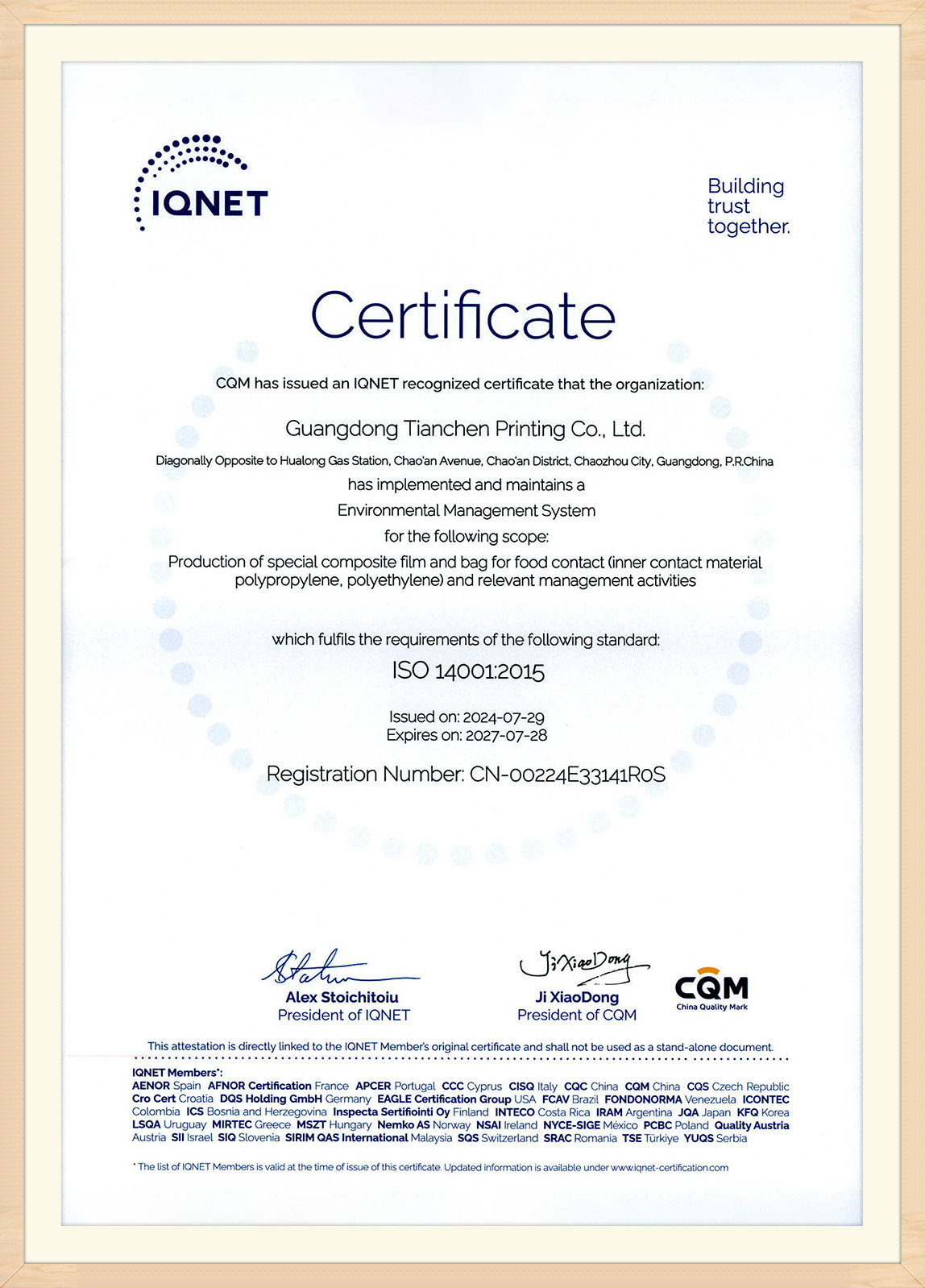
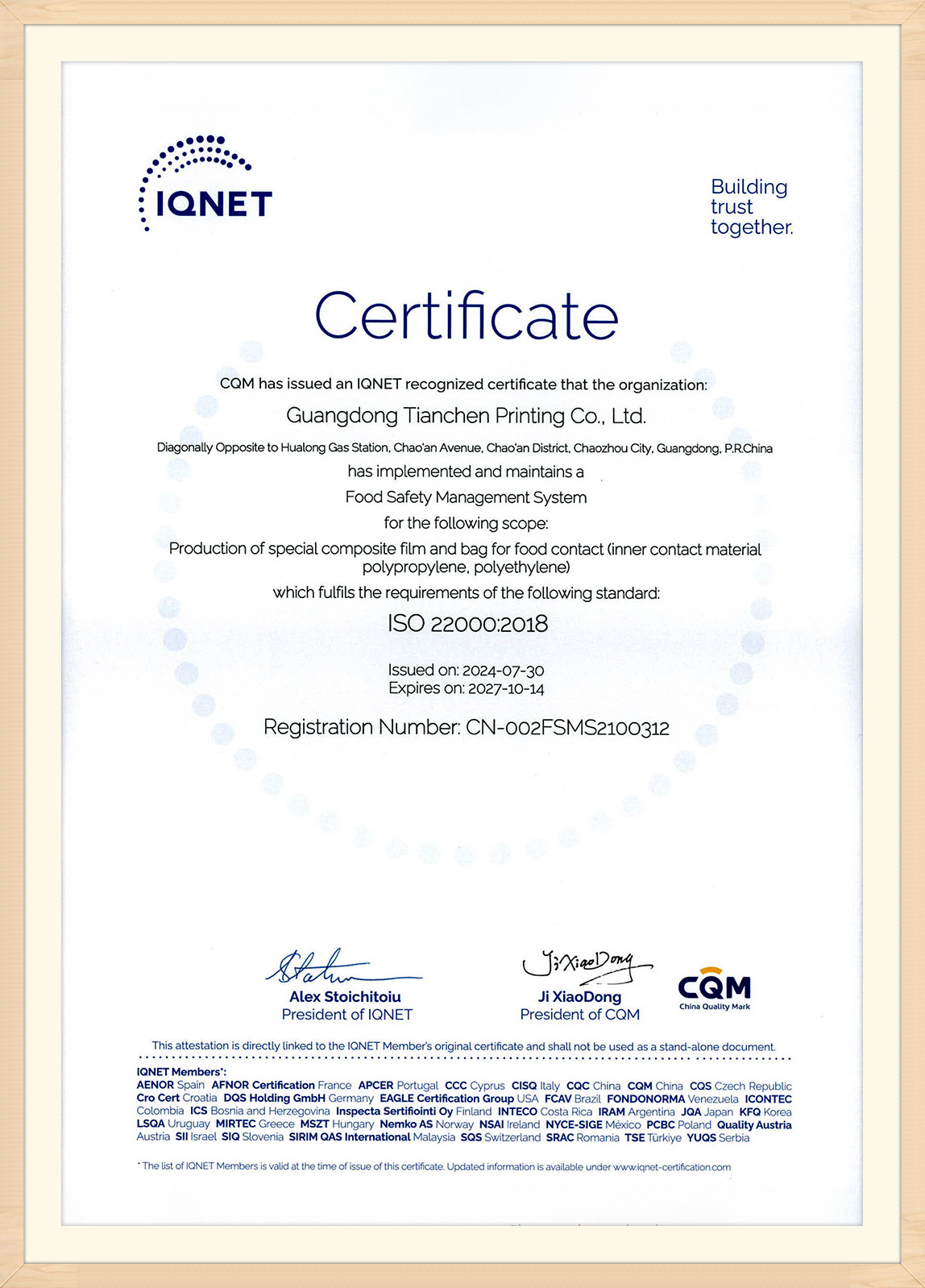
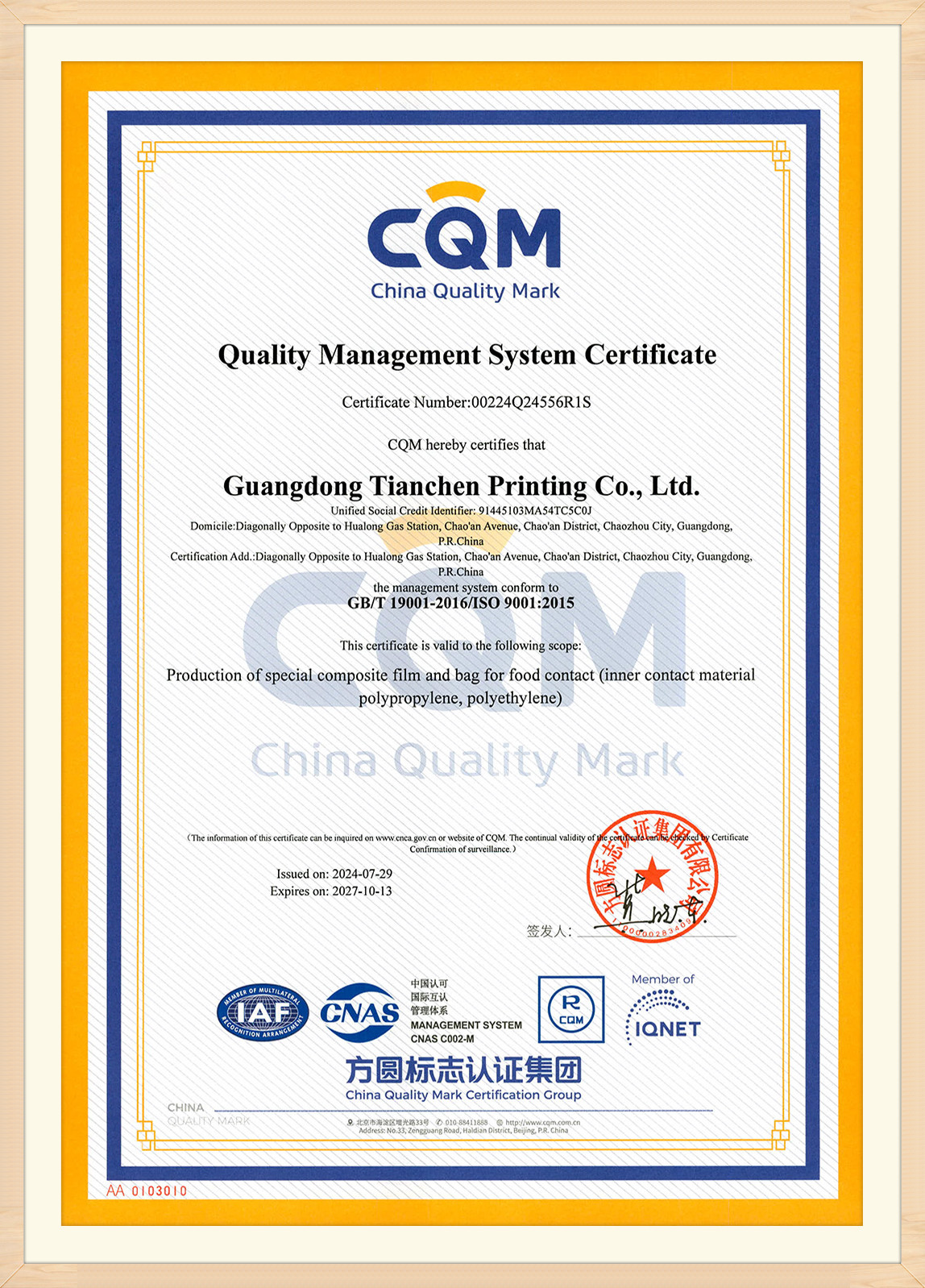
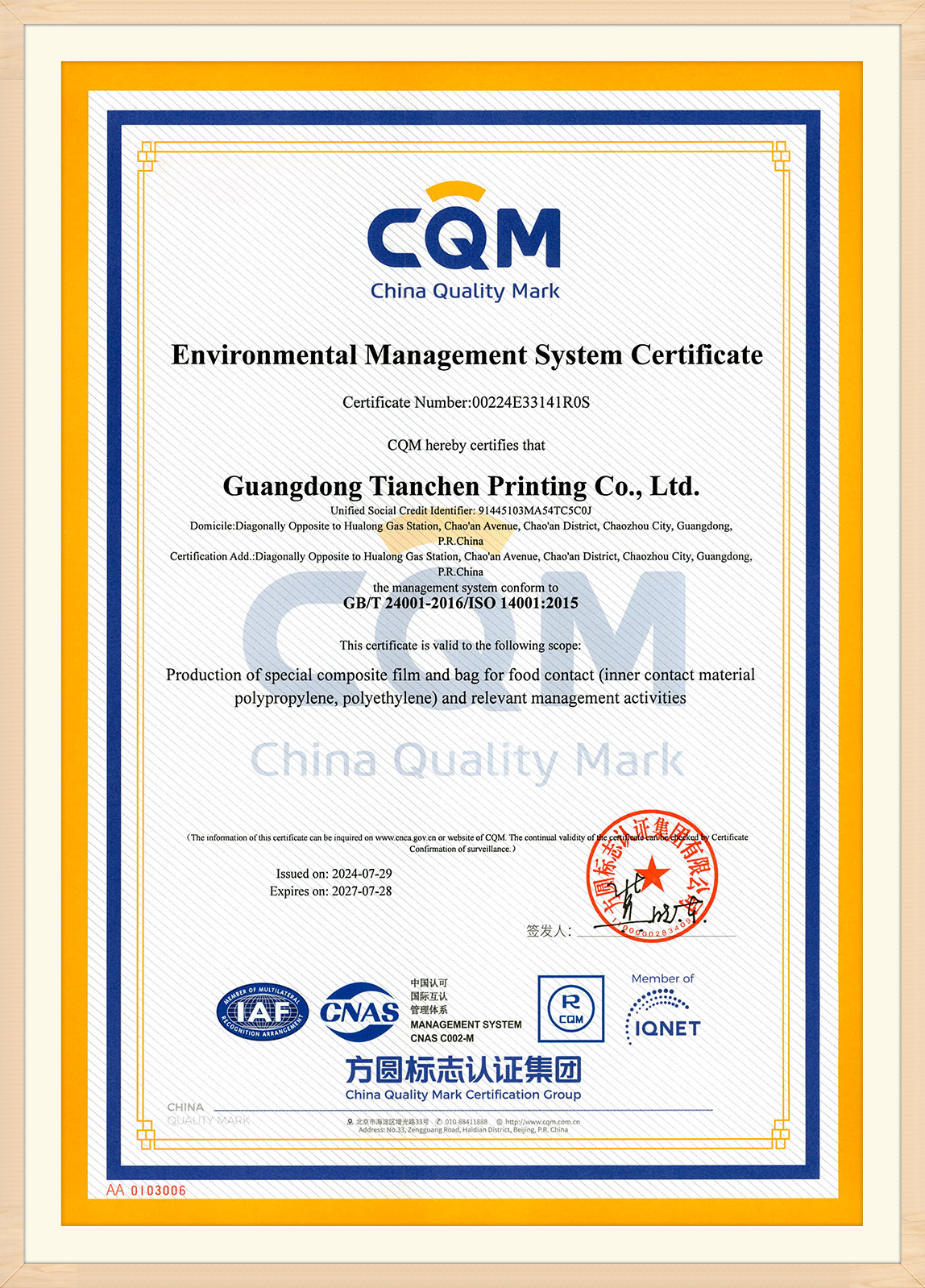
Get answers to critical technical questions regarding polymer structures, production metrics, and dynamic custom sourcing options.
Continuous innovation in high-speed roll stock films, protective chemical barriers, and retail-ready stand-up configurations.
 TIANCHEN PRINTING